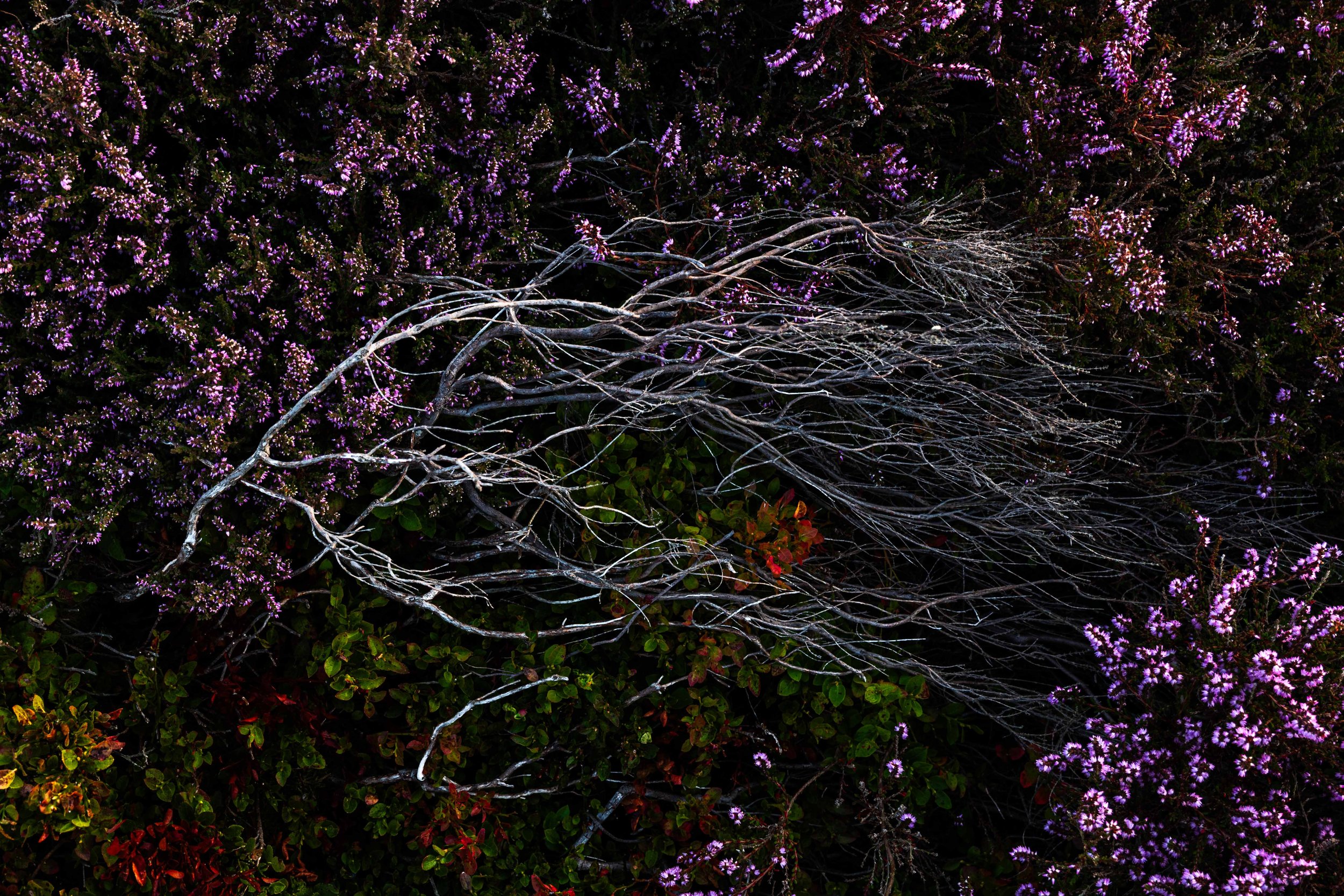
The North York Moors is a landscape of expansive moorland stretching as far as the eye can see, with seemingly endless swathes of heather. Yet the limited number of roads that traverse the National Park gives relatively little access by car to many of the areas I would like to explore, with farmland backing straight onto the moors and few drivable lanes reaching its more remote parts. This limited road access seems almost contradictory to the moorland's status as access land, which gives you the freedom to explore much of the high moor at will — as long as you're travelling on foot.
This poses an interesting problem for landscape photographers because photographing a new location is always a bit of a risk. You really only get two opportunities each day for a location to come to life: sunrise and sunset. If you're heading out specifically for one or the other, you effectively have a single opportunity. Factor in busy jobs and everyday life, and there are only so many chances each week to get out with a camera — even fewer when, as is often the case with landscape photography in the North York Moors, the English weather has other ideas.
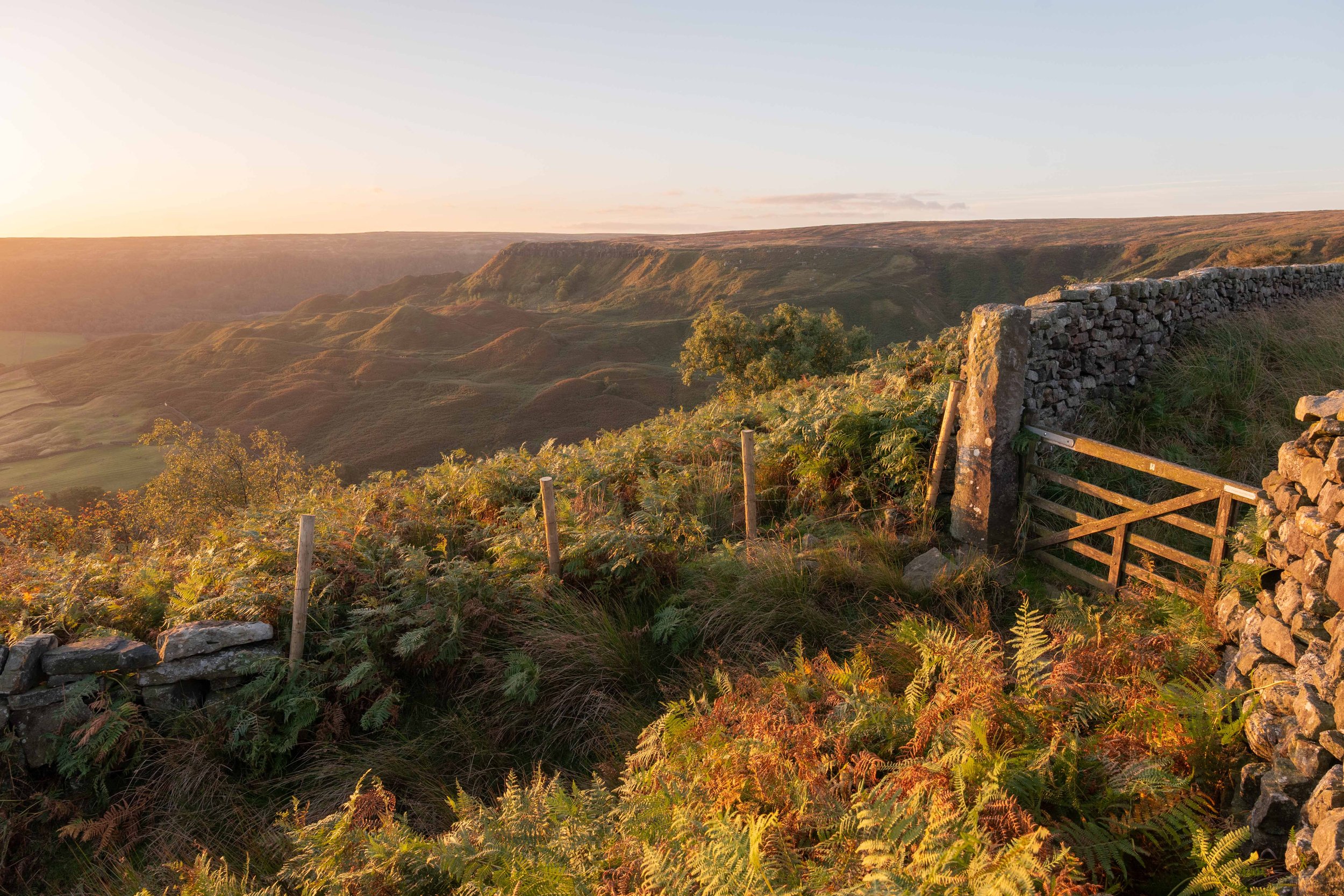
This means exploring new landscape photography locations often involves travelling considerable distances on foot without really knowing what you'll find when you get there. That's part of the fun, but when you're constantly looking for new locations rather than returning to places you already know, it can also be a little daunting. Finding these places has become particularly important to me since I started offering photography workshops in the North York Moors. I want to have a collection of locations I know well enough to take clients to in different conditions, but scouting them also gives me an excuse to keep exploring and provides a focus for my own landscape photography.
Most of my hunting begins with a map. A location might look perfect from above, but once you're standing there you have no idea how all the individual elements of the landscape will come together to form a scene that actually works through the camera. Somewhere can be absolutely gorgeous to experience and yet, for whatever reason, refuse to translate into a photograph — at least with my skill level at the moment.
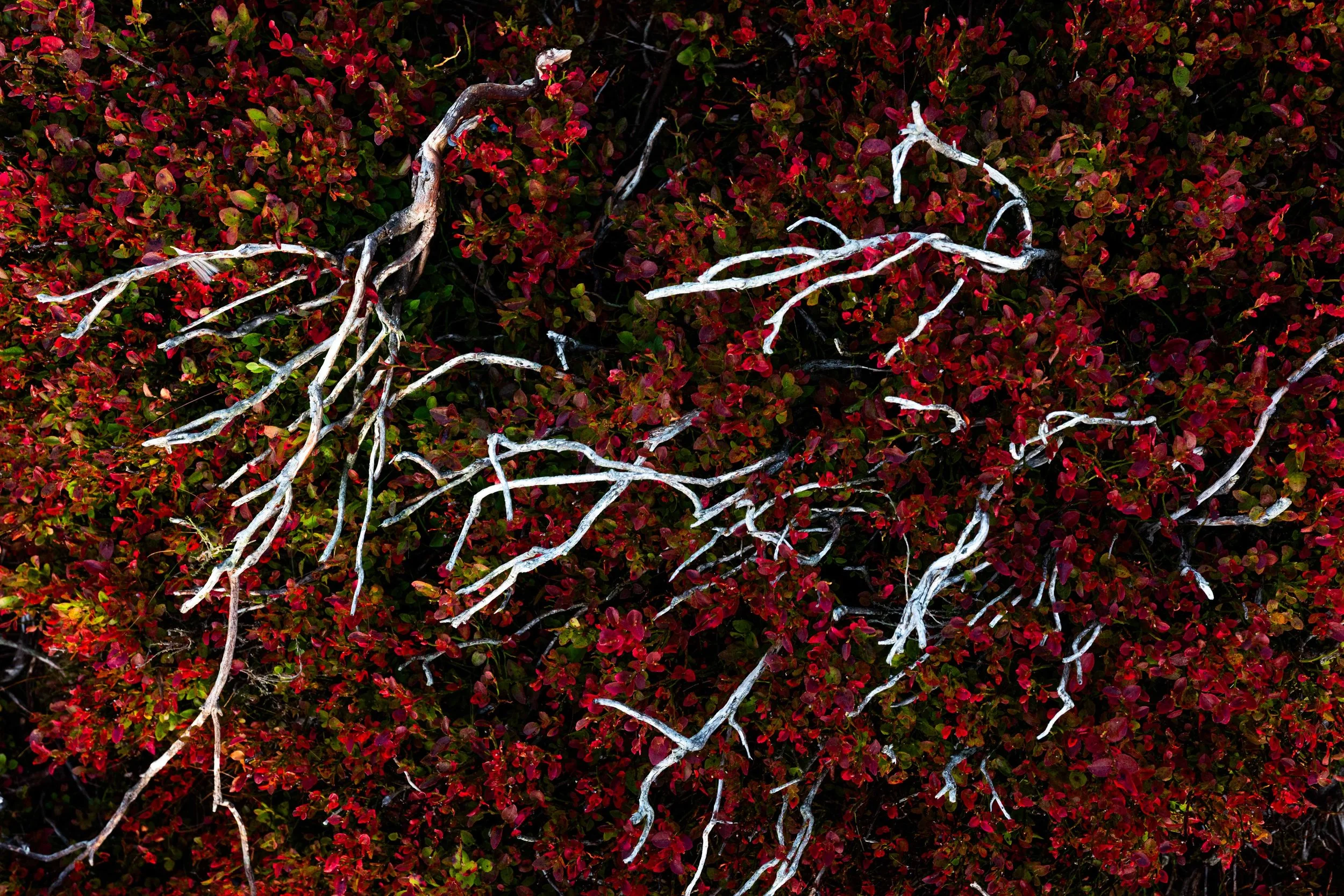
Light presents another problem. You can study the orientation of the landscape and the angle of sunrise on a map and convince yourself that the light will fall exactly where you want it, only to discover that it doesn't quite work that way once you're there. Sometimes there's too much backlighting; sometimes the light becomes harsh almost immediately after sunrise. Other scenes really need a little high cloud or mist to soften the light, simplify the landscape or hide a distracting feature in the background.
Mist on the North York Moors presents its own difficulties. Sometimes it settles beautifully into the valleys before burning away as the sun rises over the hills. On other mornings, the high moor can be completely engulfed while the valleys remain relatively clear. I've also encountered mornings when the southern side of the moors is covered in mist while further north there is virtually nothing. Whether that's partly the influence of moist air coming in from the sea, I'm still trying to figure out. Learning how these conditions behave is becoming as important to me as finding the locations themselves.
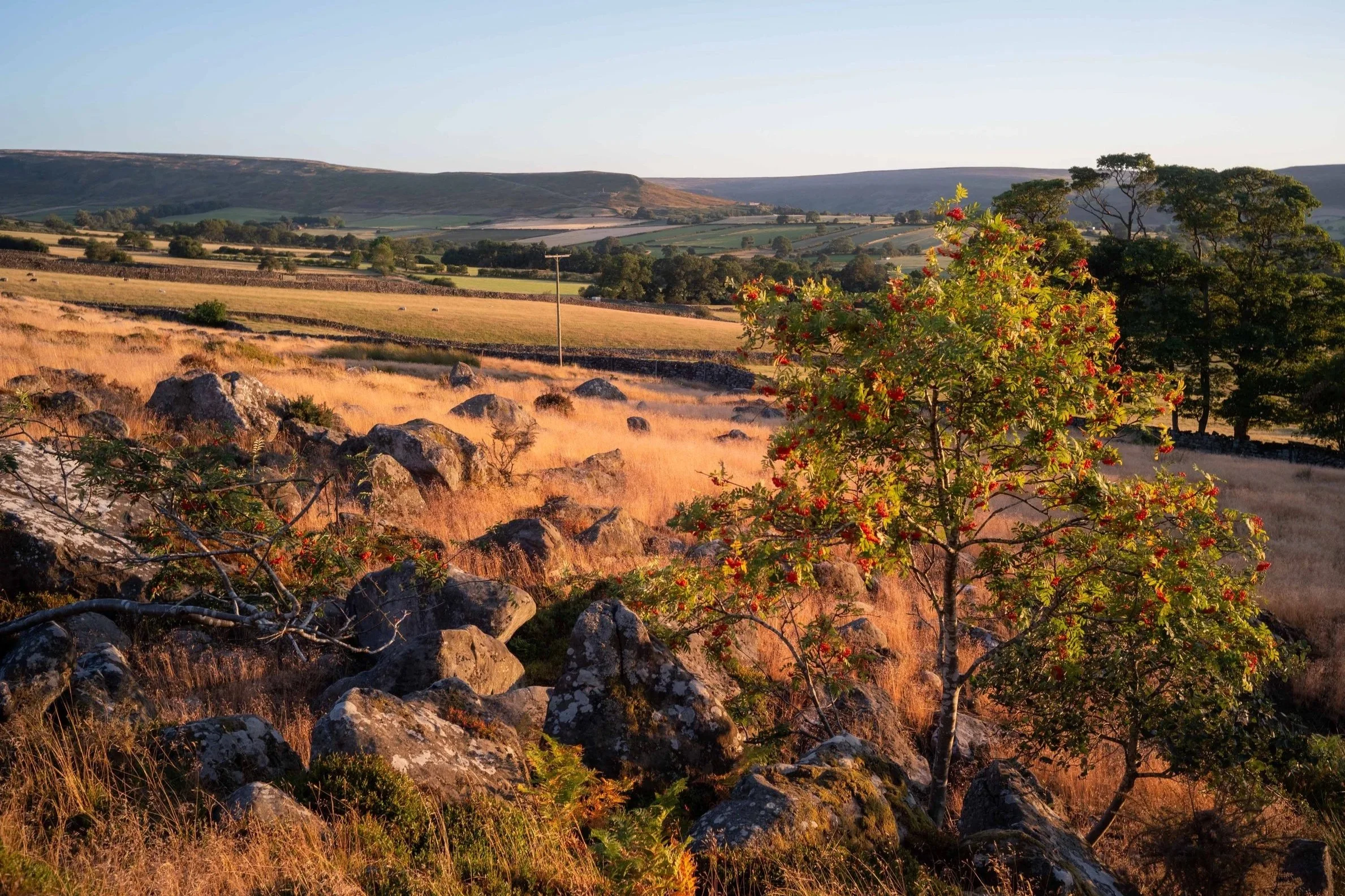
Interestingly, I've found that some of the best locations aren't necessarily the highest viewpoints or the obvious places you might initially think to visit. Increasingly, I'm drawn to the boundary between farmland and open moorland. These edges seem to hold some of the North York Moors' best-kept secrets. Here, the familiar features of the moors interact with field boundaries, old tracks, dry-stone walls, isolated trees, farm buildings and other visual cues in wonderfully rustic ways. They can produce scenes that feel as though they haven't changed for decades — and it's these quieter corners of the landscape that I increasingly find myself wanting to photograph.
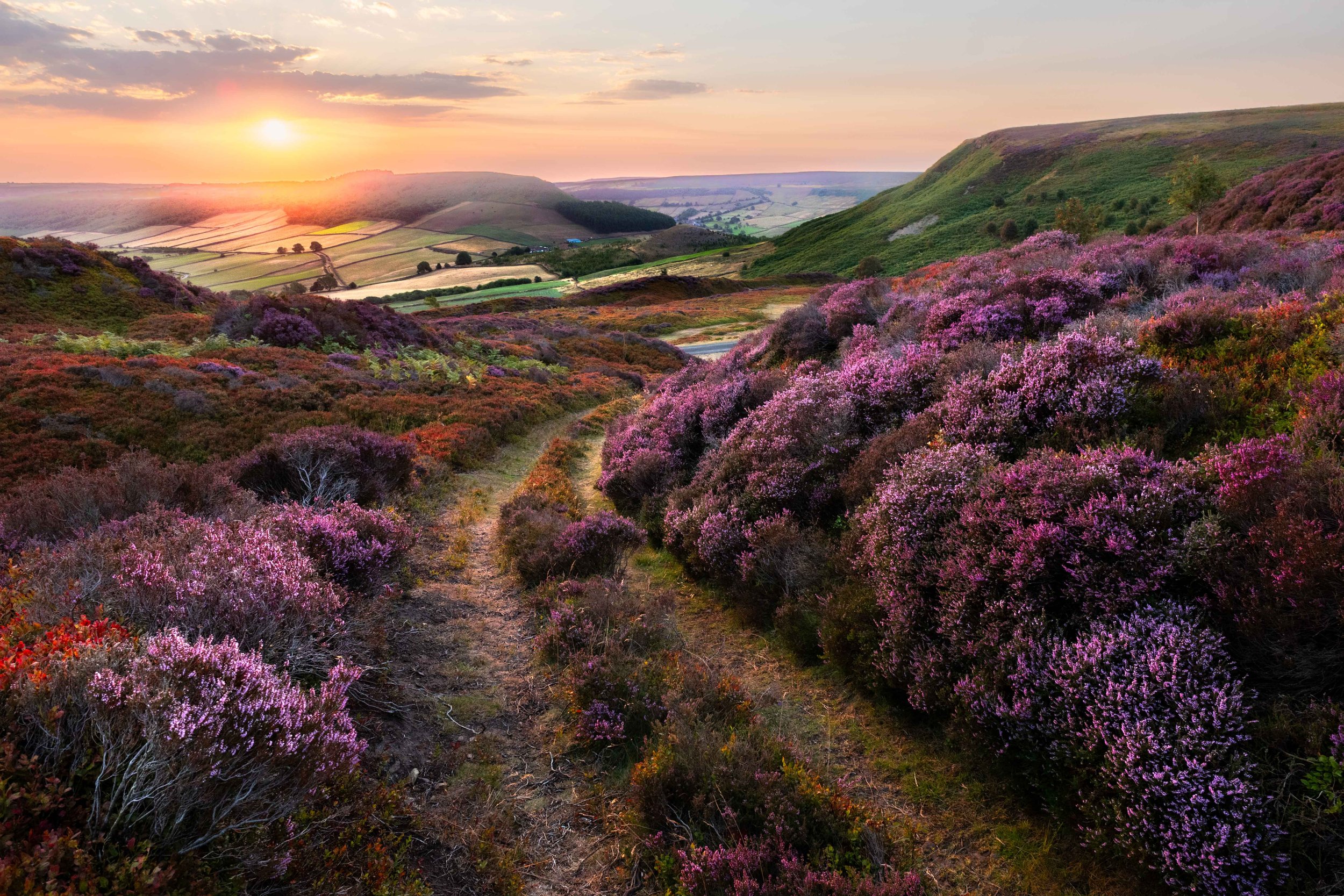
Finding landscape photography locations
The tools I regularly use to find new landscape photography locations, typically in this order, are Google Maps, FootPathMap and SunCalc.
By far the most useful is Google Maps, largely because the satellite imagery lets you get a surprisingly good idea of a location before you ever set foot there. You can pick out trees, fields, roads, tracks and other features that might make interesting elements within a photograph. Street View is also phenomenal for scouting potential compositions where roads pass through the landscape. Unfortunately, topography isn't always quite so obvious from satellite imagery, so cliffs, steep slopes and sudden changes in elevation can still come as a surprise. But, as I mentioned earlier, all of this is only a guide. Once you arrive at a location, things invariably look different from how you imagined them on a screen.
The next tool I use is FootPathMap. While Google Maps does a great job of showing roads and tracks, it often doesn't show the network of public footpaths and rights of way particularly clearly. This is where FootPathMap comes in. It shows footpaths and access routes into locations that aren't directly served by roads, which is incredibly useful when working out whether you can legally and practically reach a hill, viewpoint or section of moorland. It has helped me countless times, not only for landscape photography but probably even more so when scouting locations for wildlife photography.
The final tool — and I'm sure a favourite of many landscape photographers — is SunCalc. This allows you to see the angle and direction of the sun for a particular location, date and time. At our latitude, the position of sunrise and sunset shifts enormously throughout the year, by roughly 80–90 degrees between the extremes. As a result, completely different compositions can become possible from the same location as the seasons change, while some locations simply won't work at certain times of year.
I used all three of these tools when scouting the locations and taking the photographs in this article. They're also tools I regularly discuss with clients on the North York Moors landscape photography workshops I lead, because learning how to find a location and predict the light is just as useful as knowing what to do with the camera once you get there.
What I found
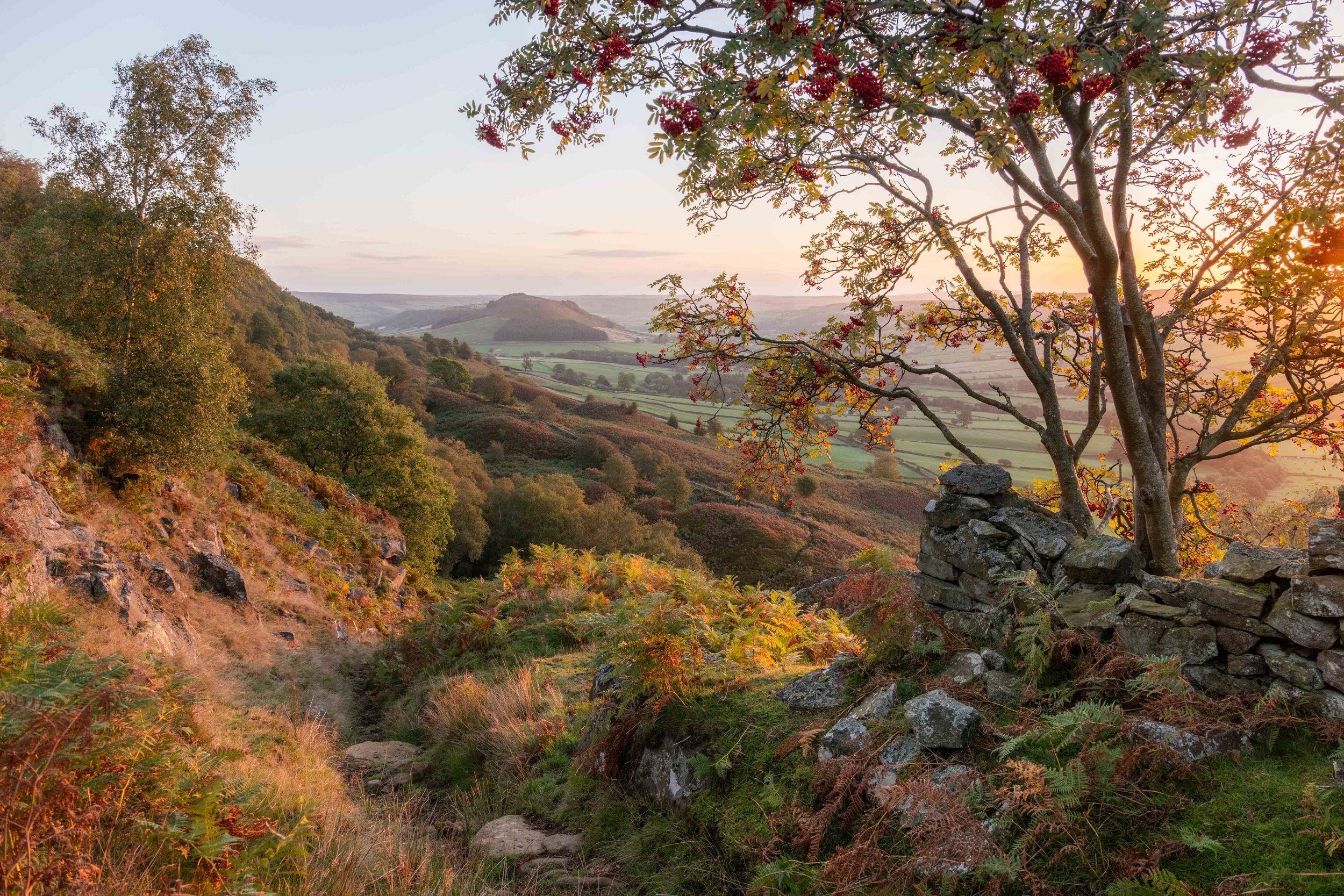
The locations I tend to look for are those with a point of interest nestled somewhere slightly hidden — places that feel as though you've stumbled across something only you have experienced. Often, I manage to trick myself into believing exactly that. At some of the locations I've found while exploring the North York Moors, I'm almost certain I'm the only person standing there with a camera at sunrise or sunset.
Old stone walls, gnarled trees, blooming heather and rocky outcrops are all features I love to include. I want someone to look at one of my photographs and immediately recognise it as the North York Moors, but then take a second look and wonder exactly where it was taken. I'm less interested in photographing the most recognisable viewpoints than I am in finding the smaller details and quieter landscapes that give the moors their character.
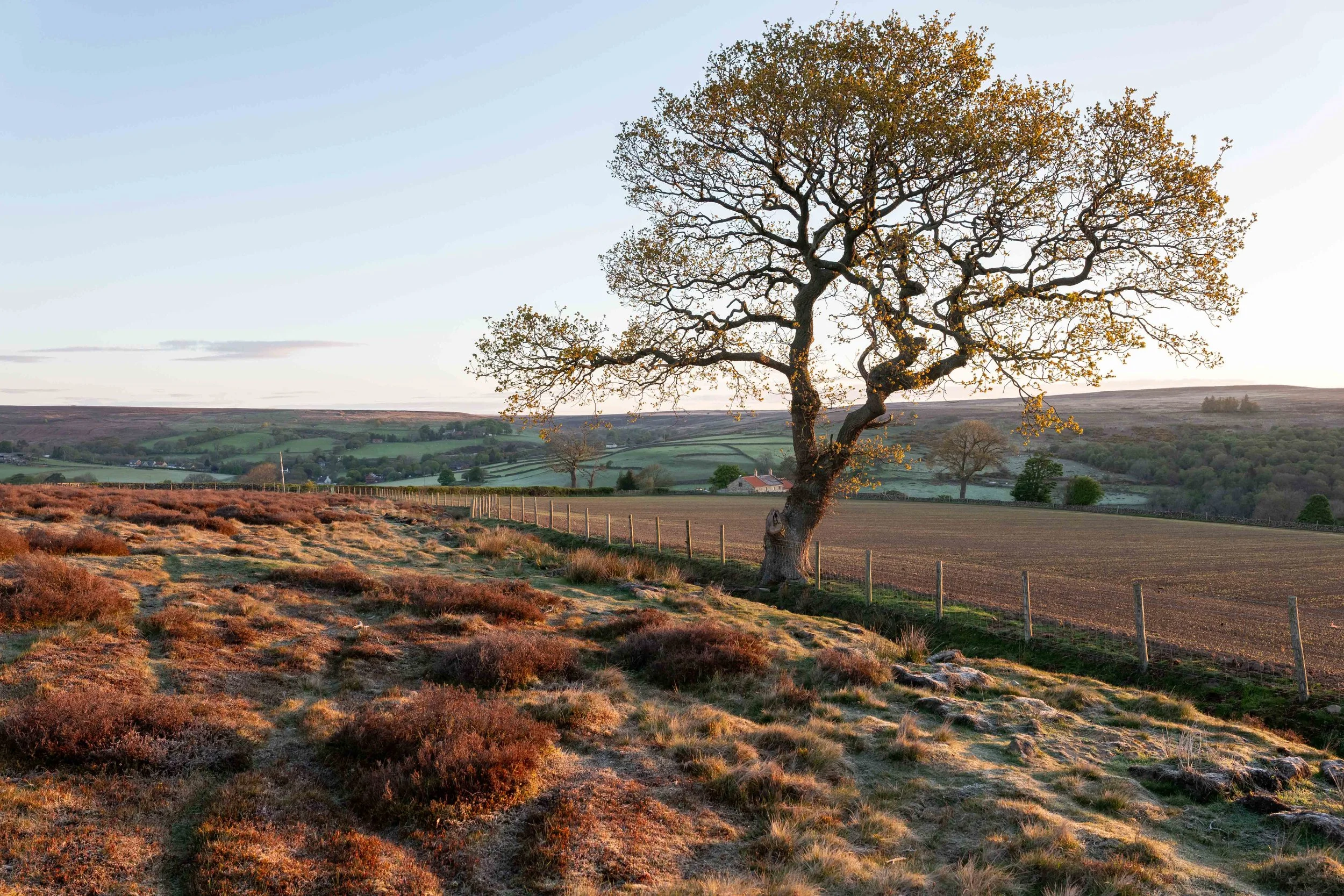
Each time I find somewhere new, I try to remember it and think about how the scene might change as the angle of the sun shifts throughout the year. That's what keeps me returning. Over every rise in the landscape there seems to be another possible composition: a different view, another feature to anchor the foreground, a clearer leading line or perhaps a natural frame through which to position the landscape beyond.
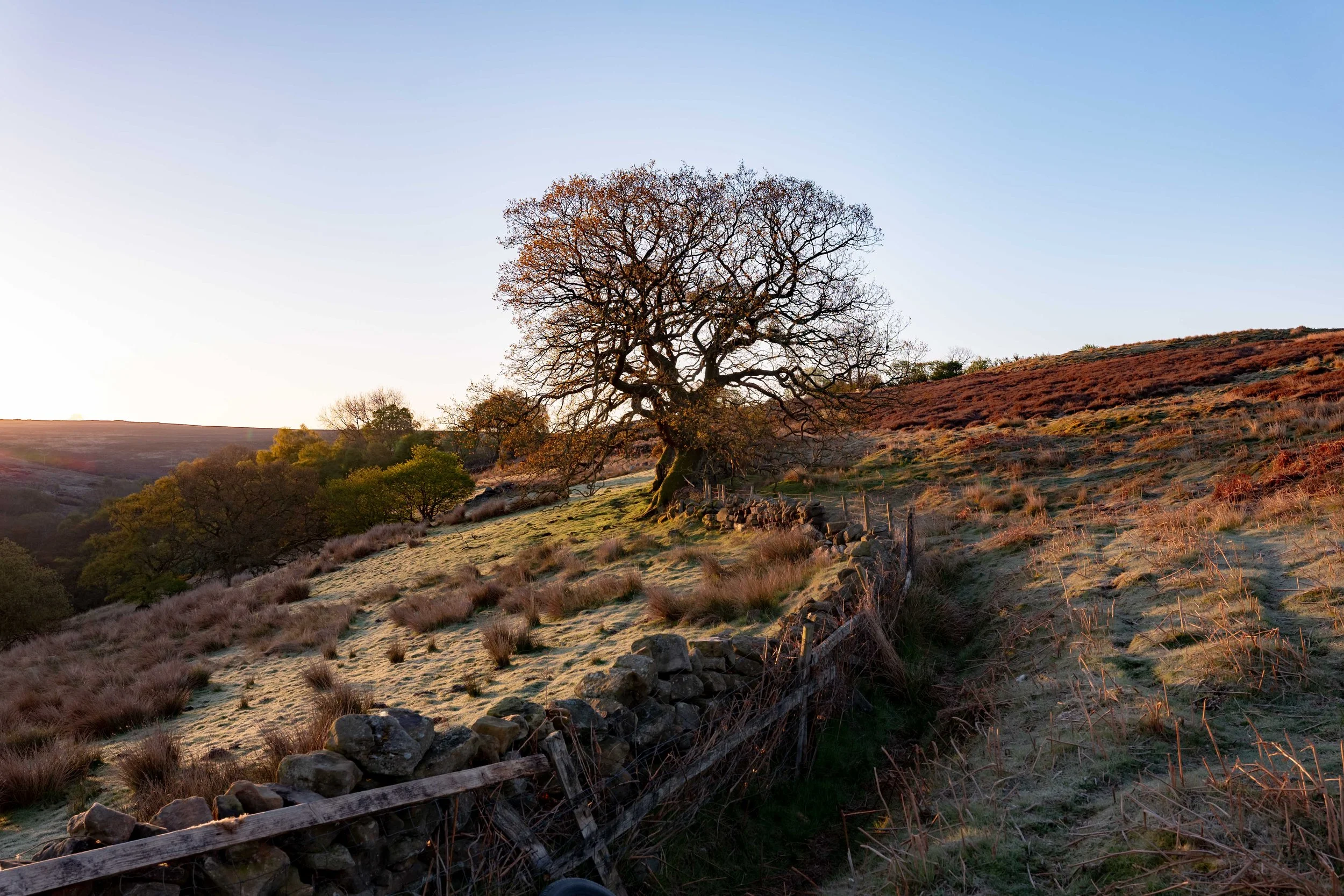
I'm particularly fond of locations that contain several photographs within the same small area. There might be a backlit composition looking towards the rising sun, a side-lit scene a few metres away and then something completely different behind me as I start walking back towards the car. Partly, I think this helps calm the slight panic that I've committed to one composition while a much better photograph is waiting just around the corner.
Of course, it also means I tend to spend the minutes before sunrise scrambling around looking for compositions rather than standing peacefully beside a tripod waiting for the light.
Returning to a location
Whenever I find somewhere interesting, I take a quick video before I leave — usually a slow 180-degree pan of the landscape around me. I'll watch it again when I get home, sometimes a few days later, and it's surprising how often I'll notice a composition I completely missed while I was there. It's a simple habit, but I've found it incredibly useful when deciding whether a location is worth revisiting and what I might do differently next time.
That's one of the things I enjoy most about finding new locations for landscape photography. A scouting trip doesn't have to produce the photograph. Sometimes the light is wrong, the mist doesn't arrive or the composition you imagined from the map simply doesn't work. But you leave knowing the landscape a little better. You know where the sun will appear, which features work together and what conditions might transform an otherwise ordinary scene.
And then you have a reason to return.
Ultimately, though, what keeps me exploring the North York Moors isn't the possibility of finding the perfect composition. It's simply the enjoyment of being outside at the most beautiful times of day, often completely alone, watching the landscape change as the light arrives or disappears. The photograph gives me a reason to be there, but increasingly I think the process of finding it is the part I enjoy most.