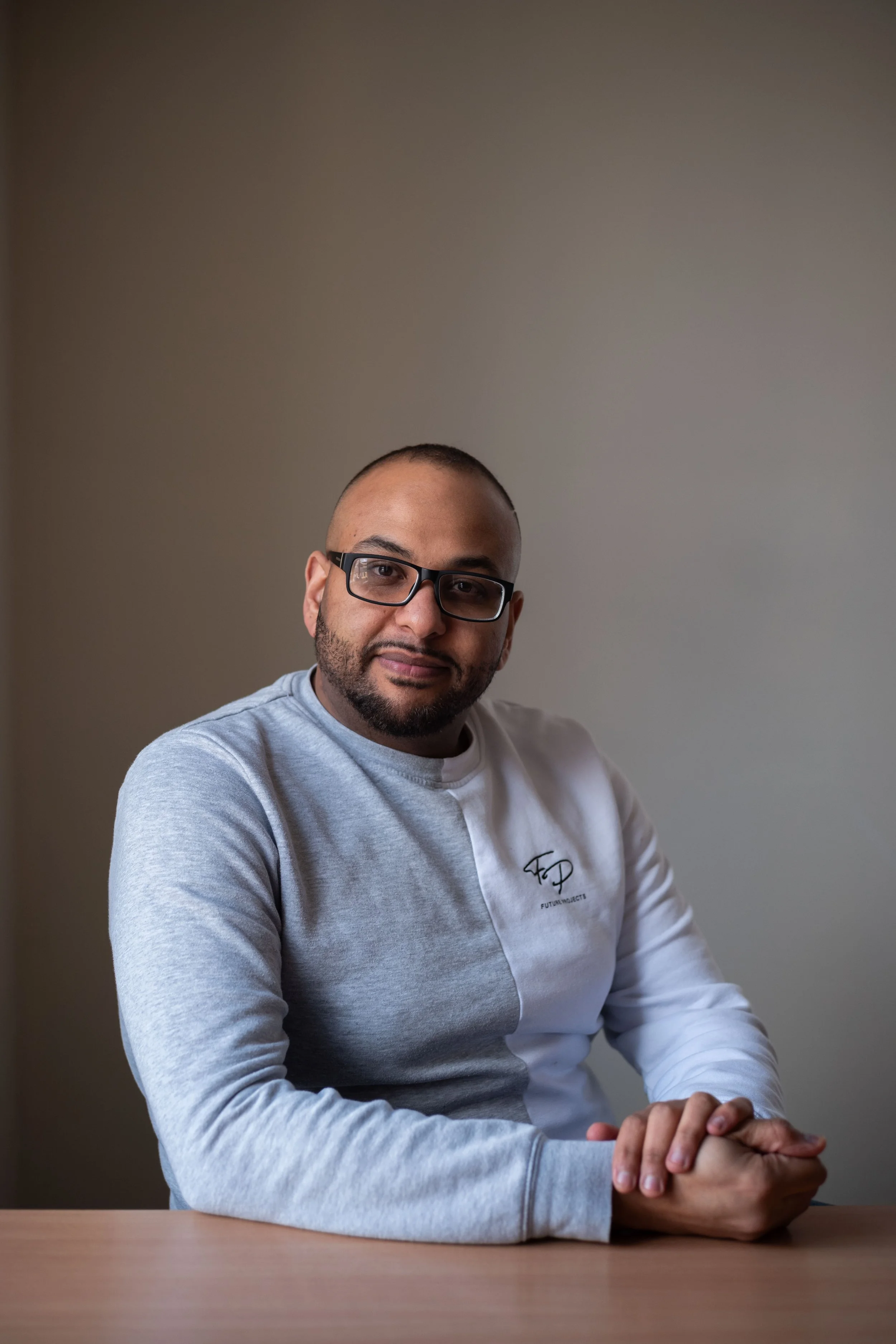
When the full-scale invasion of Ukraine began in February 2022, it did not arrive gradually for those living in the south. For one doctor from the Kherson region, the war came directly to his hospital doors within days.
“I was on call,” he recalls. “And I hear like three big tanks come… I thought maybe our soldiers. But when I saw the ‘Z’, I stepped back. I said, ‘Oh my God, this is not ours.’”
Before the war, his life had been stable and fulfilling. He and his wife, both doctors, had built careers across several hospitals in Ukraine. “Life before 2022… very good,” he says. “We were working… normal life.” Though originally from Sudan, he had spent over two decades in Ukraine. His identity was firmly rooted there. “Ukraine is my country,” he explains. “You love the place where you live… it is part of me.”
That life collapsed almost overnight.
Within 48 hours of the invasion, Russian forces had reached his town. As the only doctor on duty, he found himself treating wounded Russian soldiers under armed supervision. “They came with weapons… grenades, Kalashnikovs,” he says. “They said, ‘Please help ours.’”
For the next three months, he and his wife lived under occupation. Basic necessities quickly became scarce. “There is limited food, limited water,” he explains. Humanitarian aid, intended for civilians, was intercepted. “The Russians take it and sell it… medications, everything. They put it in the market and sell it back to us.”
The sense of lawlessness extended to personal property. “They steal my car. They steal my wife’s car,” he says. “[They] take it to Crimea.”
More troubling, however, was the behaviour of the occupying forces. “I feel from them no any feeling of sorry,” he says. “They act like everything belongs to them.” Civilians lived in constant fear, aware that violence could come without warning. “They shoot people… they shoot babies,” he adds quietly.
At one point, he was pressured to work under Russian authority. His refusal came with consequences. “They said, if you don’t work, you have to get out,” he recalls. Leaving, however, was far from simple.
By late April, he and his wife managed to secure evacuation through the International Committee of the Red Cross. The journey out of occupied territory was perilous. Travelling in convoy, vehicles were marked with white flags and signs indicating the presence of children. Even so, safety was not guaranteed. He recalls one story he heard “Some people wrote ‘children’ on the car,” he says. “They killed all the kids inside.”
The journey across Ukraine took days. Along the way, they passed destroyed infrastructure, military checkpoints, and the remnants of ongoing fighting. “We see bombs, tanks… everything,” he says. “My wife was crying all the time.”
Eventually, they reached western Ukraine, then crossed into Poland, and finally made their way to the UK.
But escape came at a cost. “We lost everything,” he says. “Our house, our cars… everything.” Their hometown remains under occupation, and family members are still there, living with limited electricity and constant surveillance. Communication is rare and cautious. “We don’t ask questions,” he explains. “If they speak, they can be killed.”
In the UK, he has begun the long process of rebuilding. Both he and his wife are working to requalify as doctors, navigating a system that has taken years. “Three years… it made me crazy,” he says. Still, there has been progress. He is now close to full registration, while his wife works within the NHS as she completes her own requirements.
Despite the challenges of starting again, he remains committed to supporting Ukraine.
Across the UK, Ukrainian refugees have formed networks of support, contributing to the war effort from afar. For him, that contribution is both practical and deeply personal. He volunteers with Ukrainian soldiers training under Operation Interflex, offering medical assistance, translation, and basic support.
“I go there, speak with them… help them,” he says. “Take history, check them, if they need anything.”
It is a continuation of the same spirit he witnessed during the war itself, where civilians did whatever they could to support those fighting. “You have to do something for the country,” he says. “You cannot just stay.”
That sense of responsibility remains strong, even here in the UK.
For now, the future is uncertain. Returning home may not be possible. “Everything is dead,” he says of his region. “There are mines… no houses.” Rebuilding, if it happens, will take years.
Yet, despite everything, there is still hope.
“We hope,” he says, “one day everything will be happy again.”
If you are interested in more of my stories about Ukraine I have more here and from my trip to Ukraine last year. I am in the process of writing up my lasted trip the April just been where i have written a short ‘first thoughts’ peice. I will be writing more so please do come back.