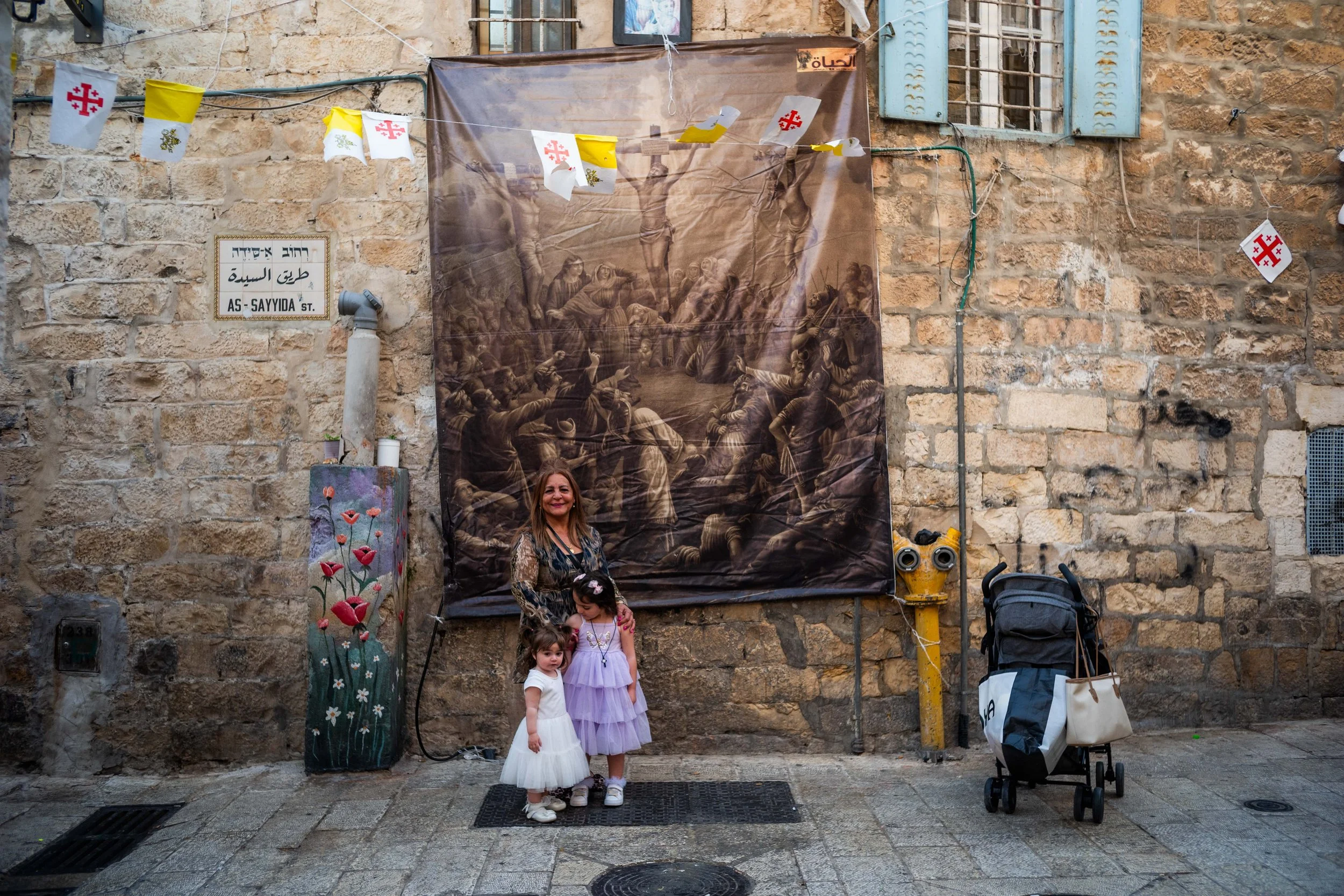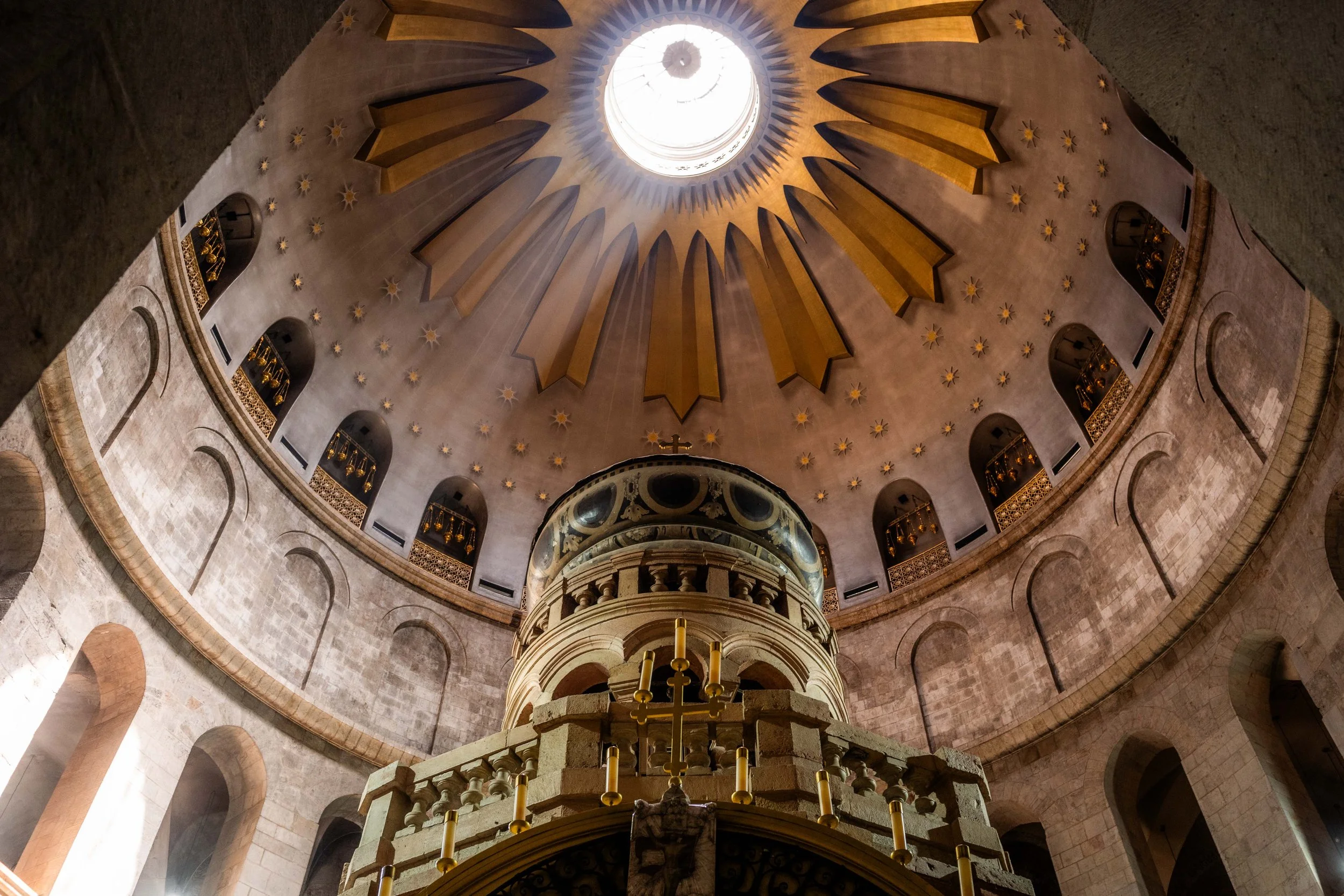
As the Orthodox Christian Easter approaches, I am reflecting on last year, when I spent Holy Week in Jerusalem. It is a week of liturgies, vigils, ceremonies, and song, following the final days of Christ as he journeys to Jerusalem and the end of his life before the crucifixion. A week of eminent worship for Christians throughout the world, yet one often overshadowed in the secular world by Christmas.
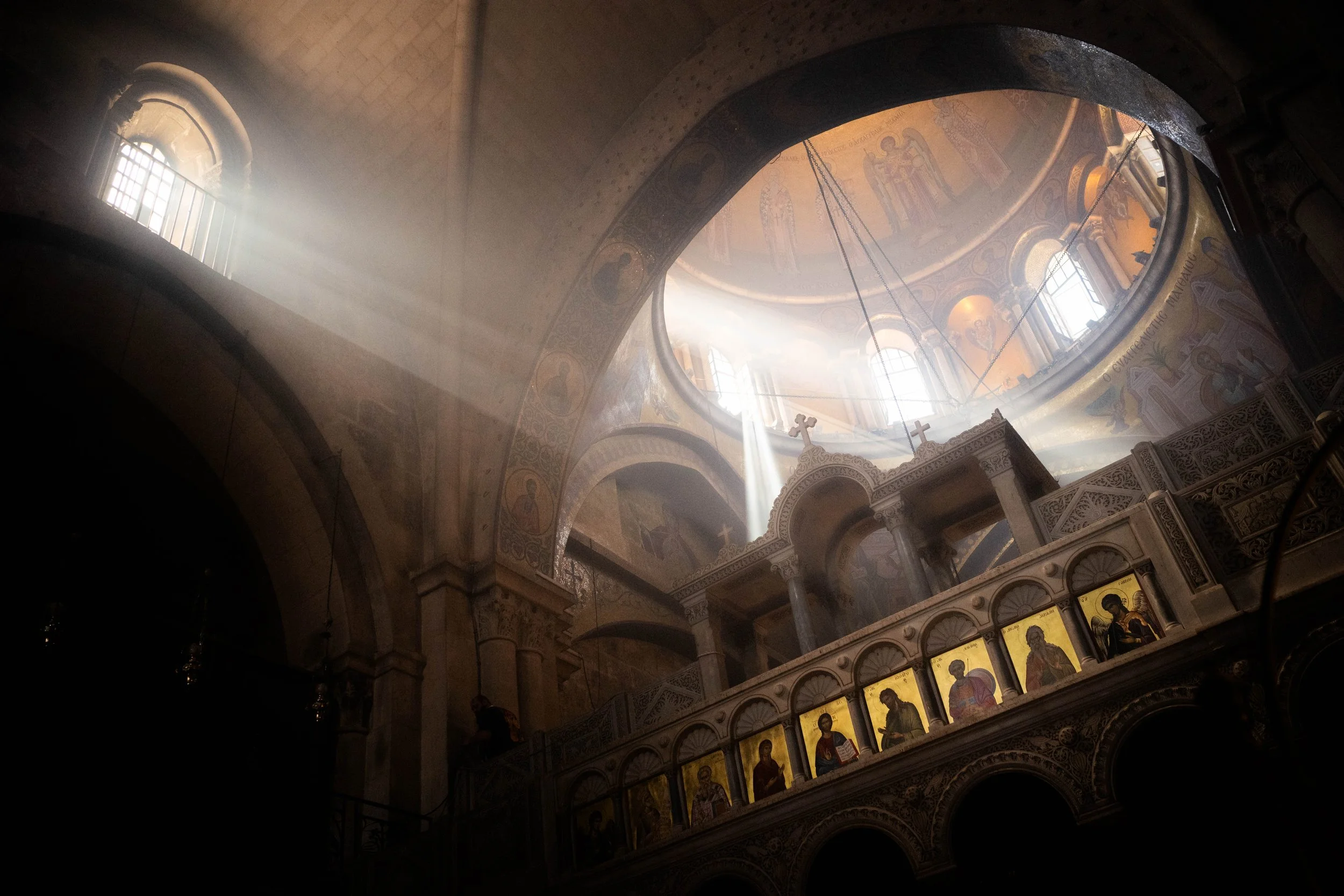
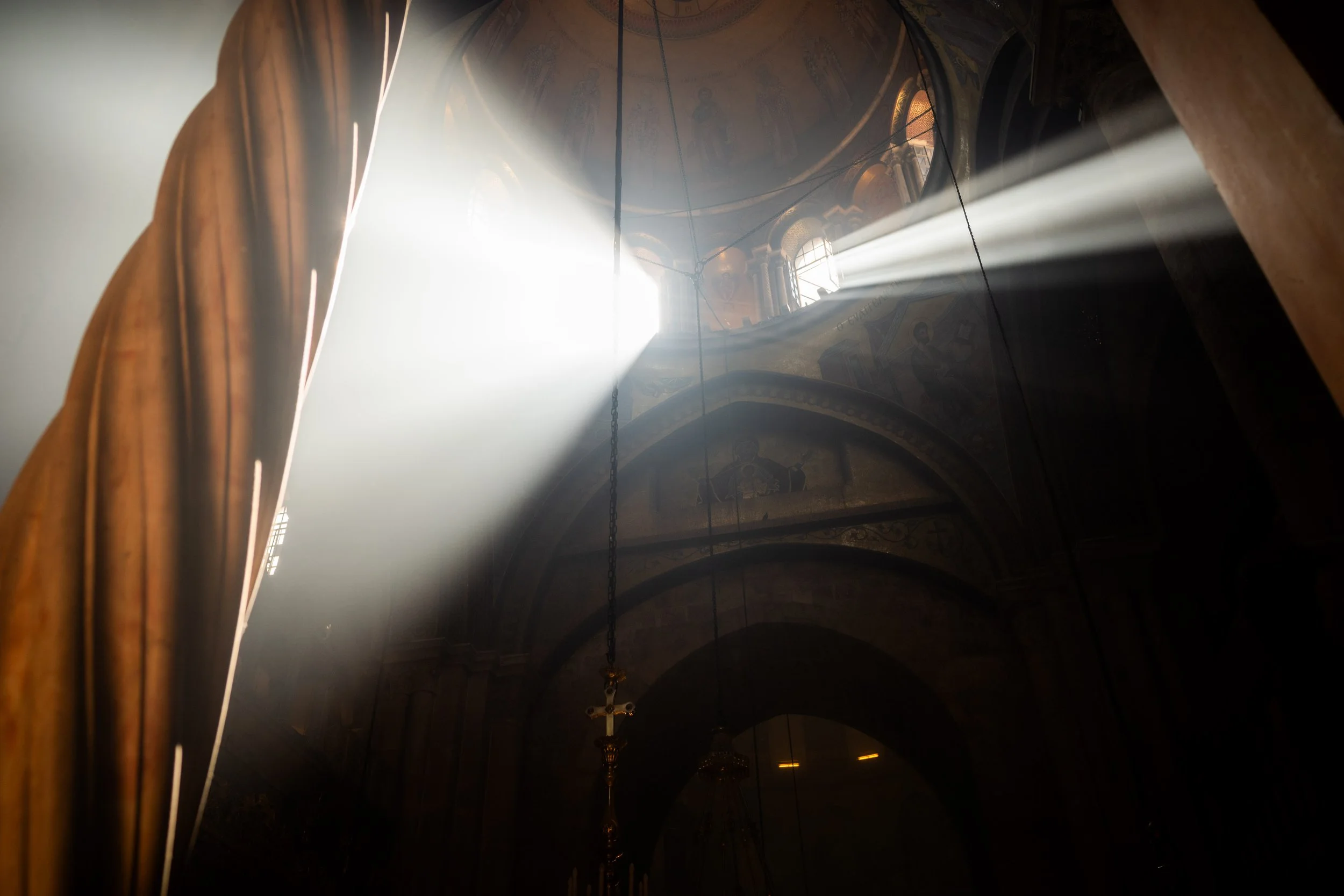
For the few weeks I had been in Jerusalem, this was the denouement. Holy Saturday, with the Holy Fire in the Church of the Holy Sepulchre, the site at which Jesus was crucified. I had a ticket for entry, along with diplomats, to view from the balcony above the Edicule. This was a real privilege. I hoped to get photos of the flame moving around the church, but this was not to be. I had been warned about what might be to come, and I was tentative.
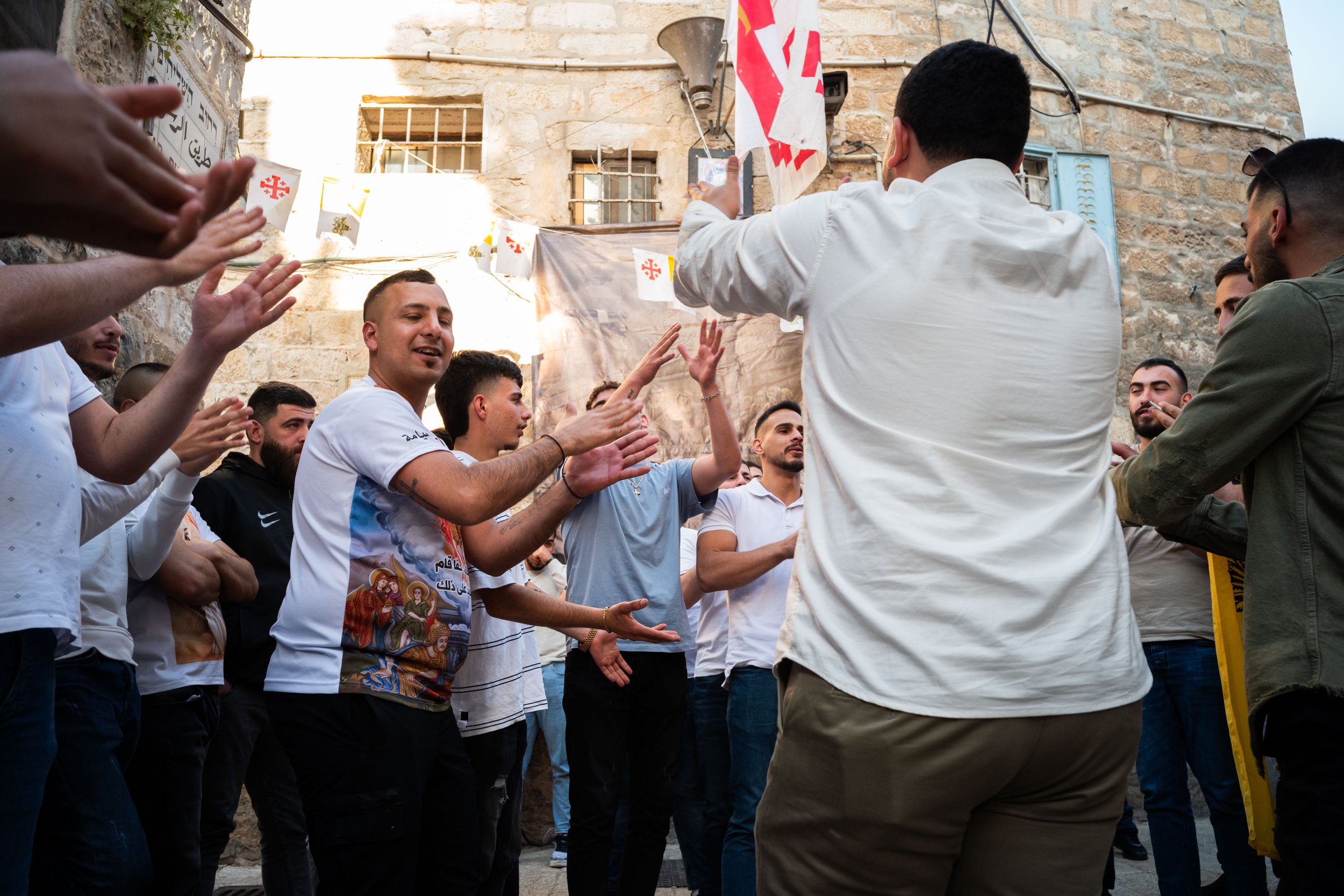
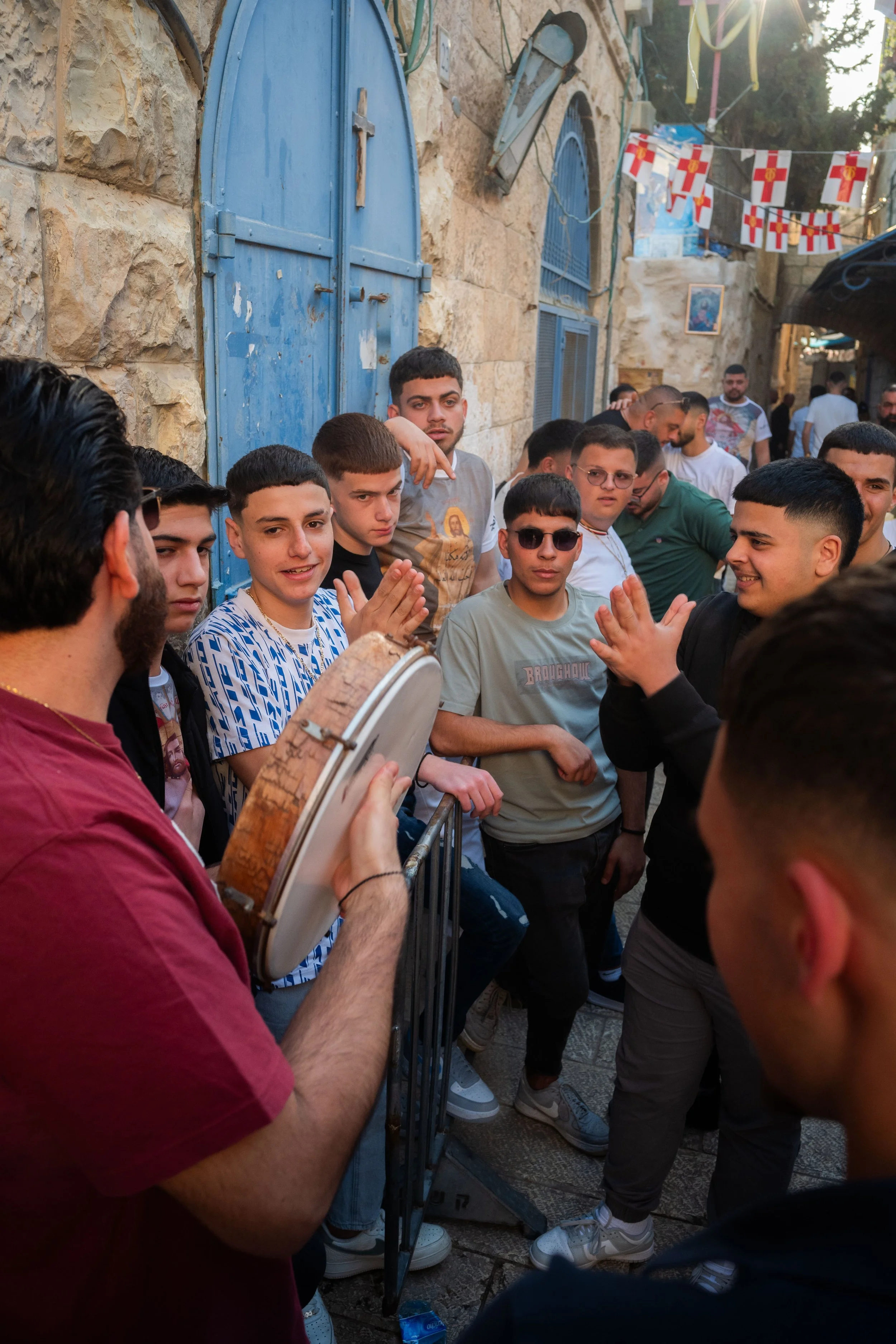
I woke up on Holy Saturday before sunrise and started my morning workout, making the most of the cool air, when I heard cheering, chanting, singing, stomping, and music. As with all these cues, I hesitated, initially thinking something bad was happening, but then I realised it was celebration. I grabbed my camera and dashed down the narrow alleyways to find a large group of lads partying in the street.
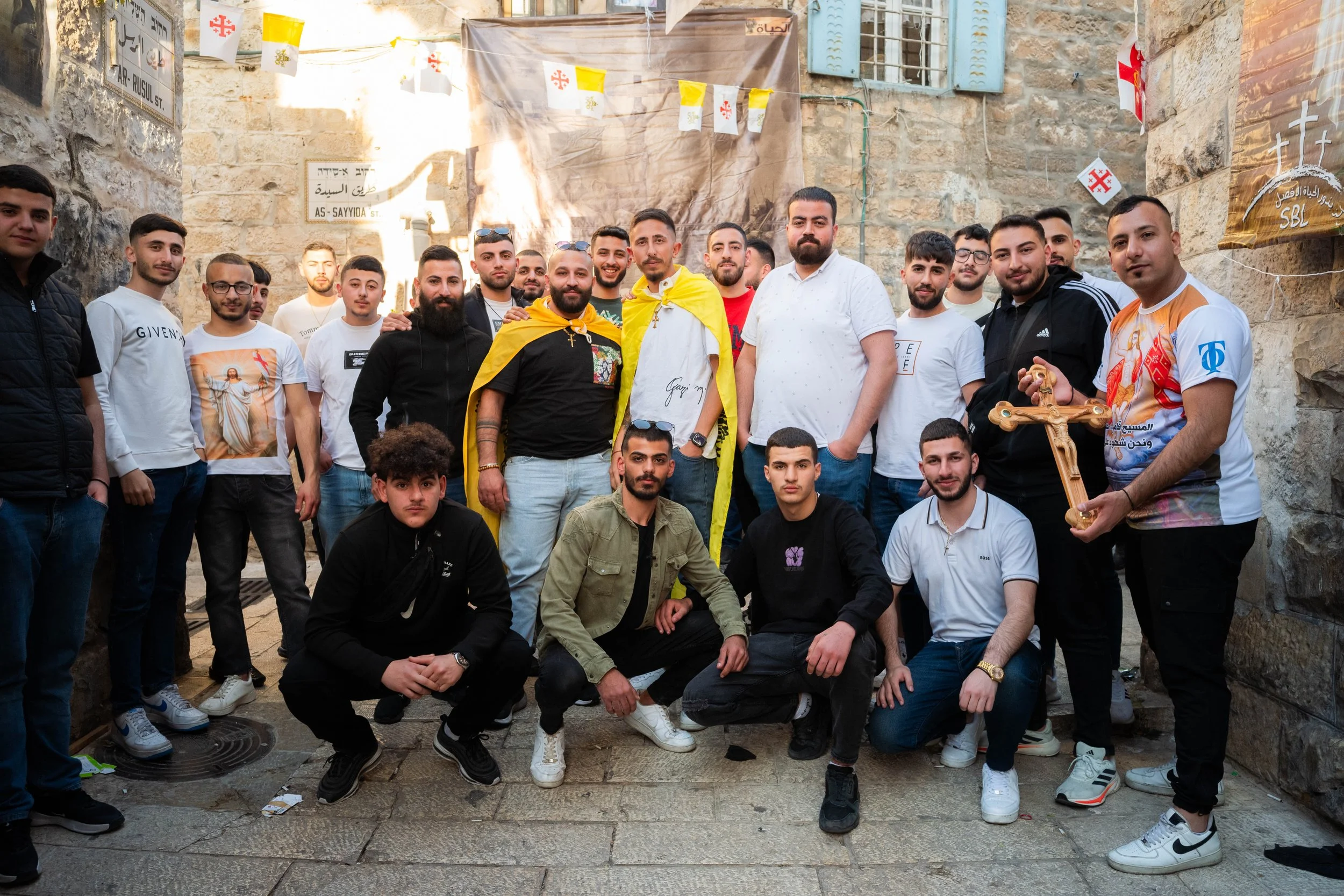
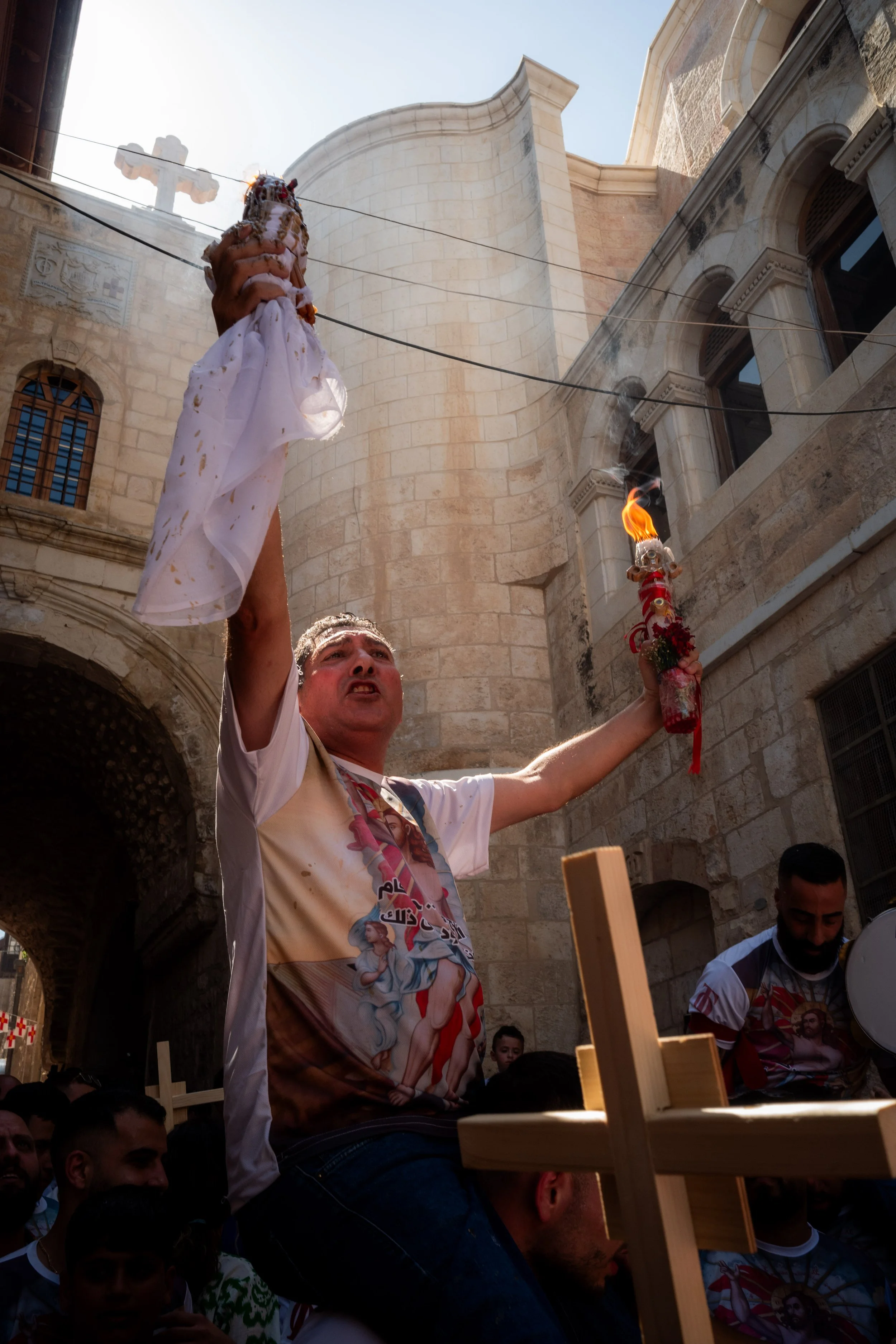
It was like a scene from a football team celebrating. Drunk, disorderly blokes singing, chanting, and dancing, with the odd bash and knock against one another, nearly sparking outrage but always feeling just under control. There was a major difference, though. These guys were not celebrating sport. Wearing their team’s tops, they were celebrating the resurrection of Christ, swinging crosses in the air and wearing T-shirts that read, “Christ is risen... Truly he is risen, and we are witnesses to that.”
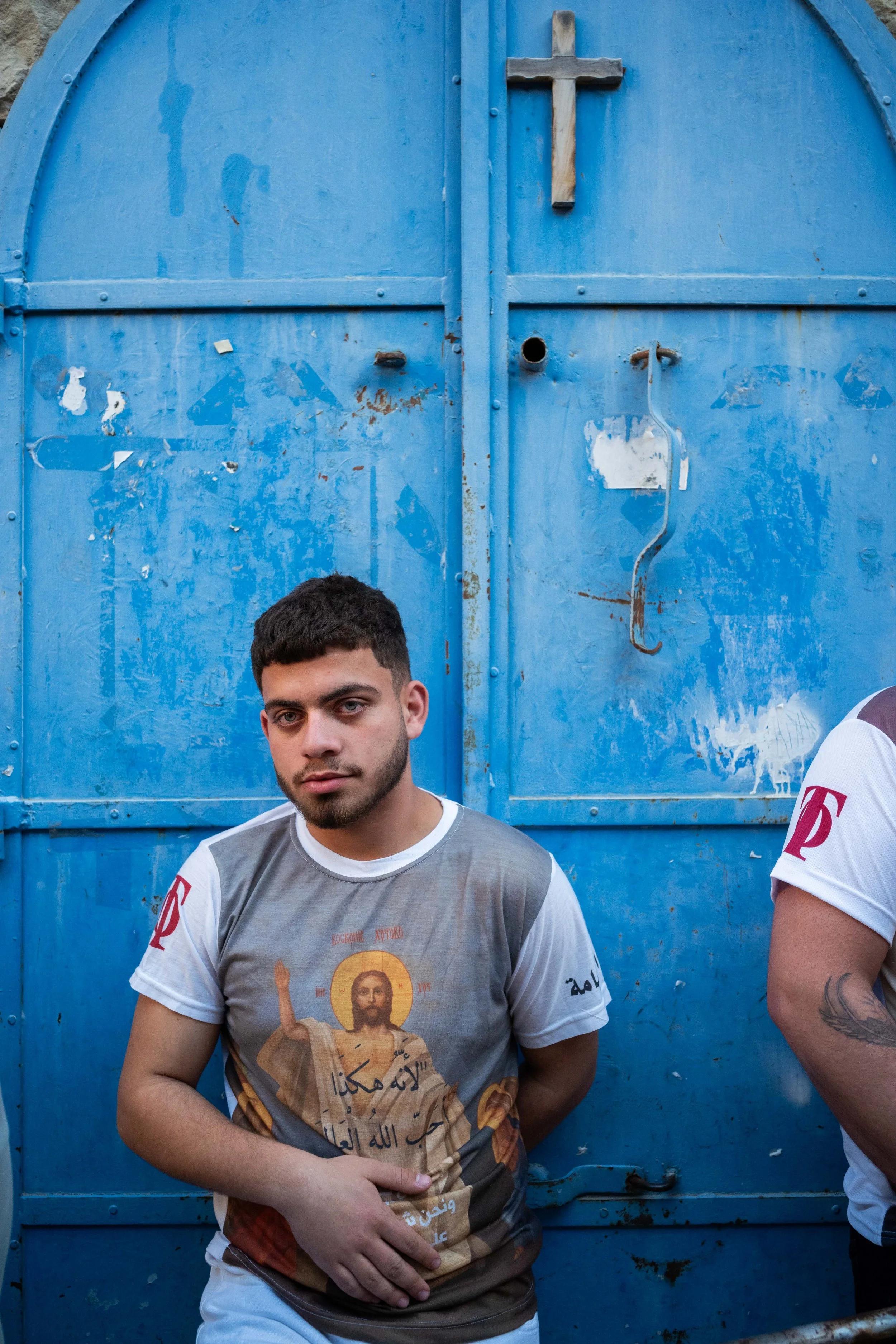
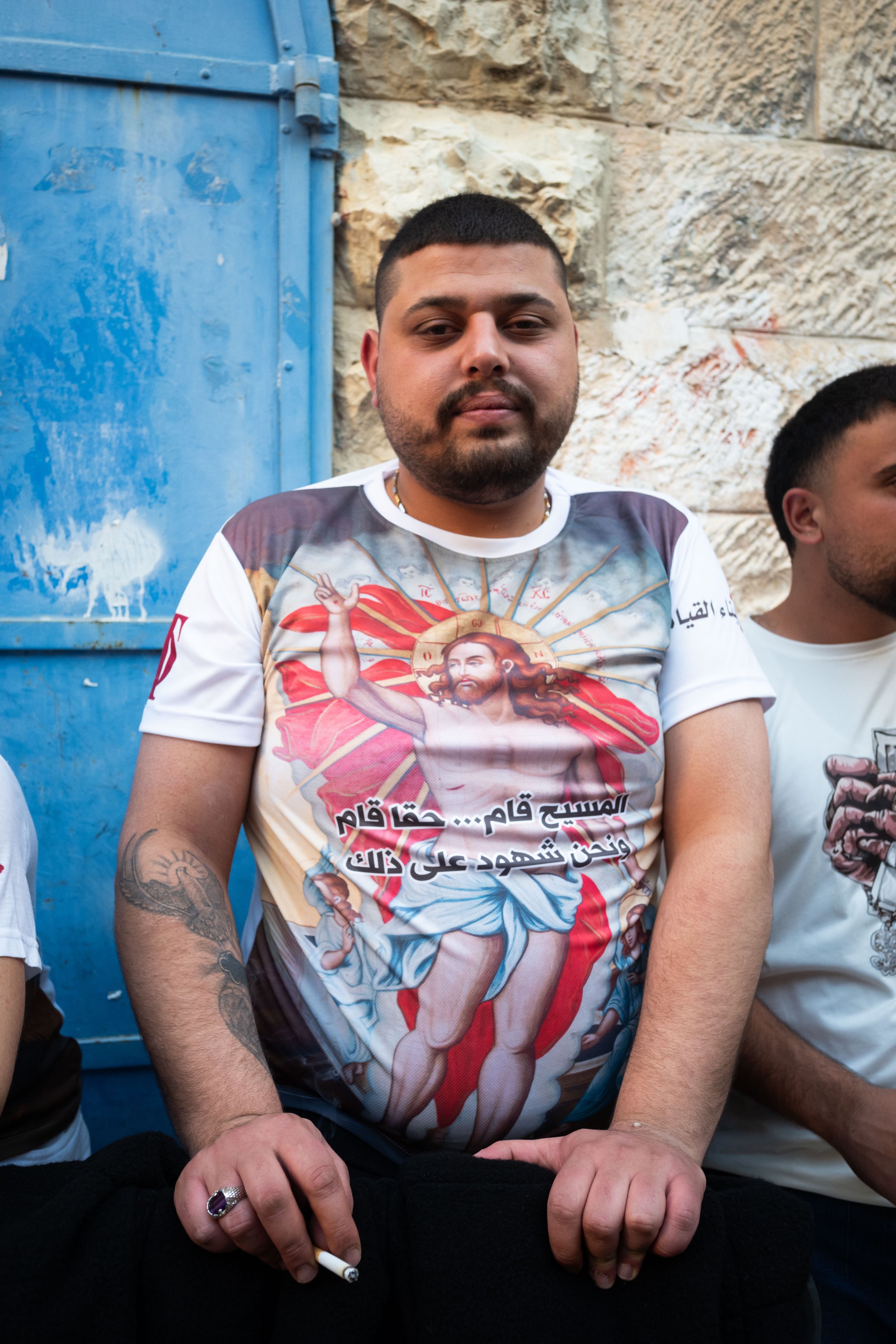
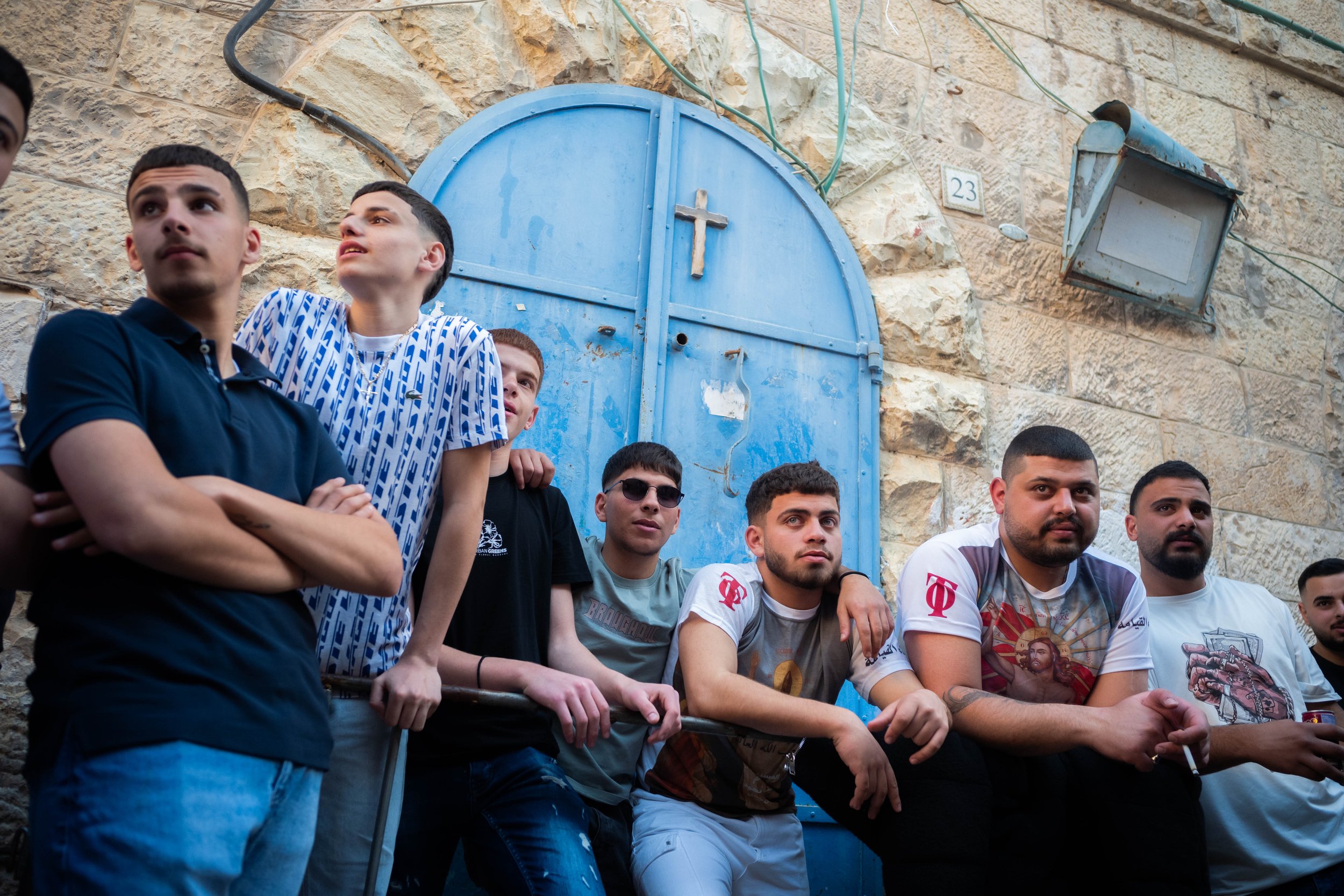
It is a daunting thing, walking into a large group of lads, made slightly less so by the fact that they were devout Christians, but that “what if” in the back of one’s mind still lingers. I began talking to people, taking photos, and quickly settled into it. Some of the guys had come from towns in the West Bank, using a seven-day pass allowing them into Jerusalem to celebrate Easter week. This was controversial, as not everyone was granted one, and those who had them were on tenterhooks as to whether they would be allowed through the separation wall. As it was only seven days, one had to choose whether to attend Palm Sunday or Easter Sunday, as the pass would not allow both.
As the morning went on, the group swelled. More T-shirts were handed out, and the rowdiness only increased. They had been partying all night, and now the morning wore on. Other people began to gather too.
This was when the police moved through. They grabbed individuals who did not look local and questioned others. The crowd quietened at this point. Tourists and those from outside the area were pushed out. I fell quiet and slipped in next to the guys I had been chatting to. Unsurprisingly, I did not pass as a Palestinian Christian. As the second police officer walked past, he did a double take, looked me in the eye, and asked, “Where are you from?” I replied, “United Kingdom,” and he said, “Get out.”
He was holding an AR-15 across his chest, and his superior officer, who had already passed me, was getting physical with others. I did not argue. I stepped out of the crowd and headed towards the flat I was staying in, waiting to see if I might get another chance to return.
Then someone, I could not see who, tried to enter a doorway just off the small square we were in. The two police officers rushed them. As the door closed, the police forced it open. The person behind it fell to the floor, and the officers were on top of them. A young boy, no more than ten years old, covered them, shouting, “They live here, they live here.” The police were rough, trying to pull the boy away and force entry to arrest whoever they had seen.
Those of us who had been pushed out, along with a small number of tourists, looked at one another and then ran. My flat was around the corner, so I ran there. I had been warned there would be tension, but I did not want to be arrested or removed from the Old City so early in the day.
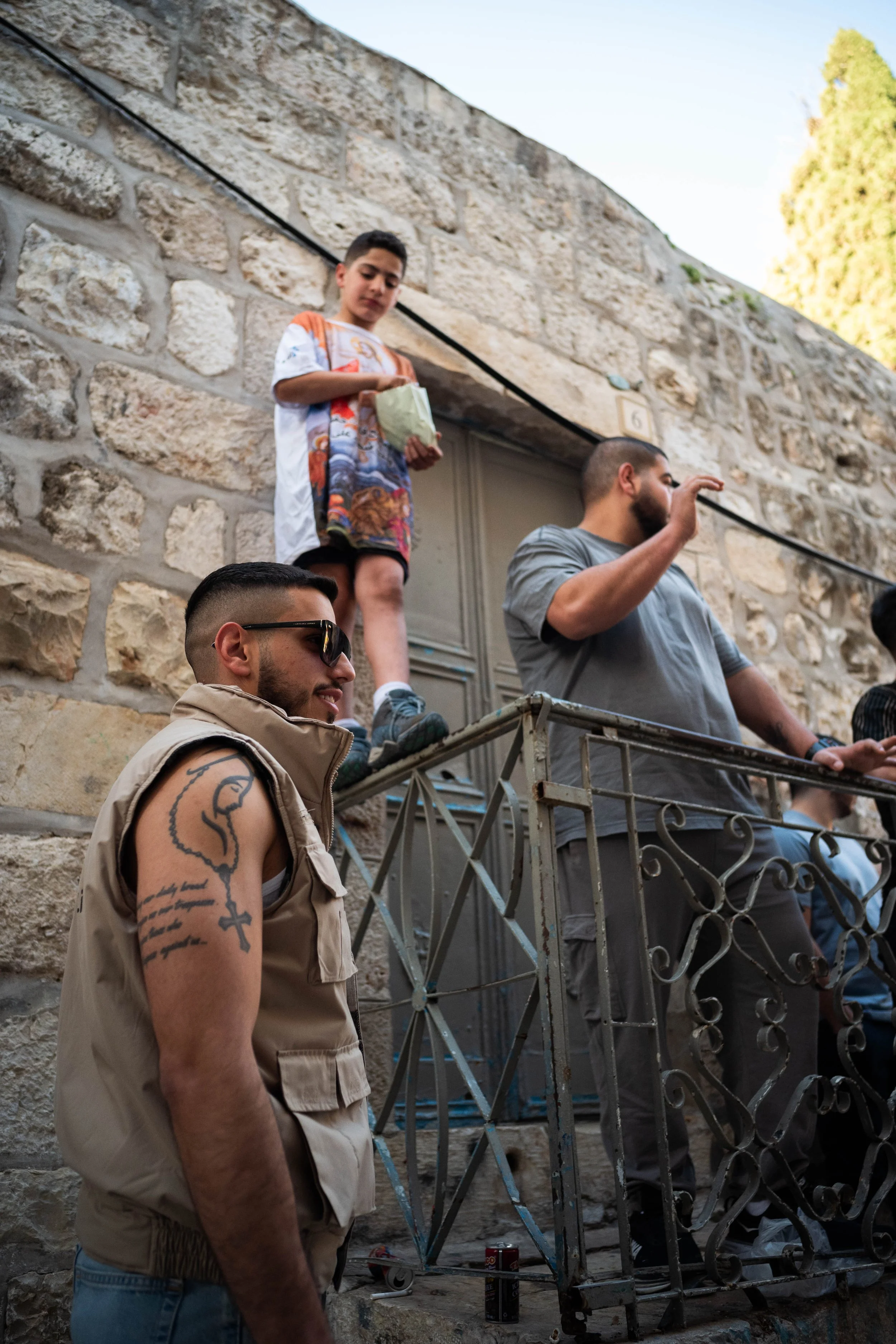
As I dashed into my flat, I went through the first wire-grilled door, followed closely by a nun who locked it behind us. It turned out she had also been in the crowd and had fled, following me through the small entrance to the flats where I was staying. She had not been allowed back to where she was staying and had already had confrontations with the police. What struck me was that, as a photographer, I could understand the tension between myself and the police, but for a nun to be this panicked was unsettling.
After some time, things seemed to settle outside, so we moved back onto the street, said our goodbyes via Google Translate, and went our separate ways.
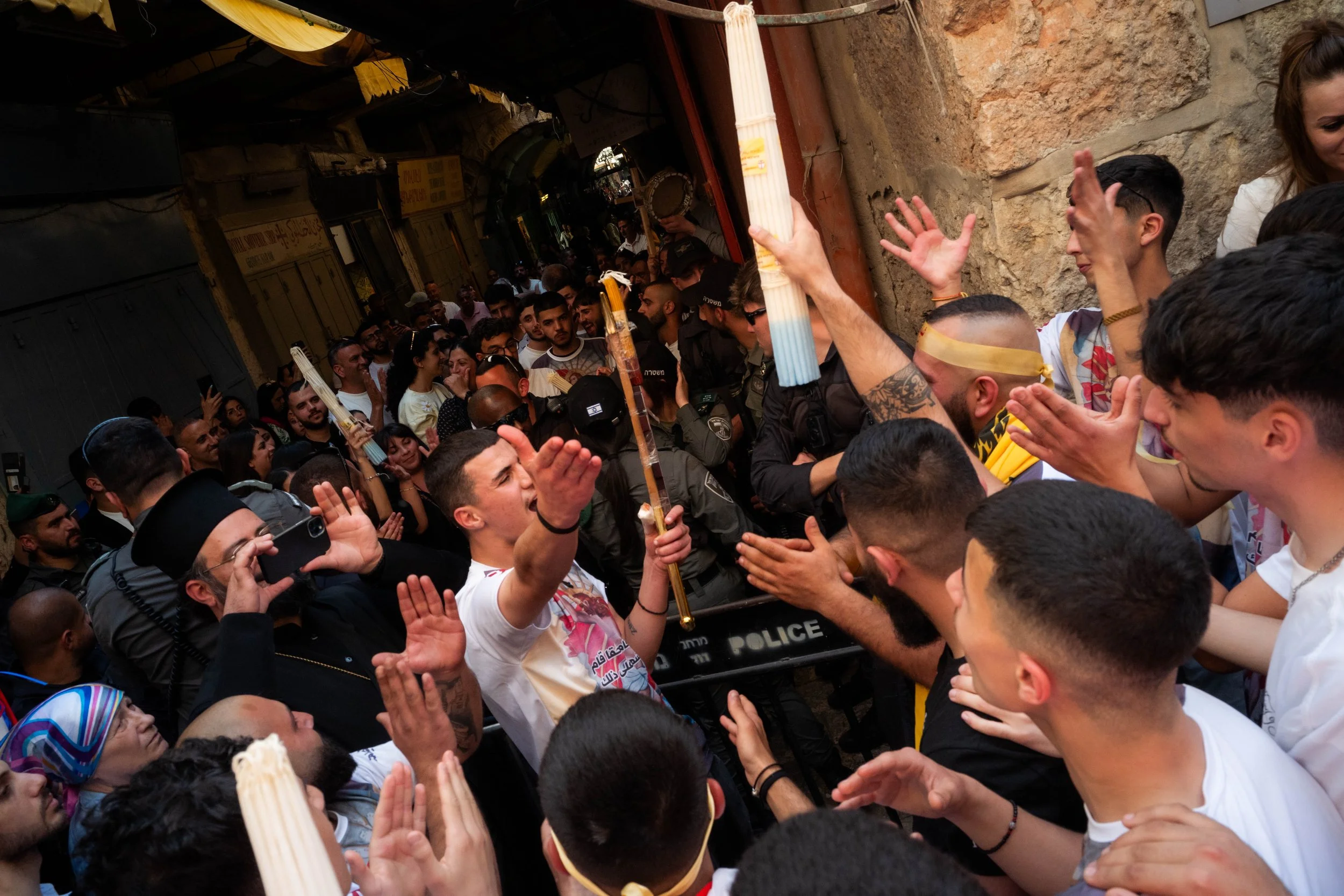
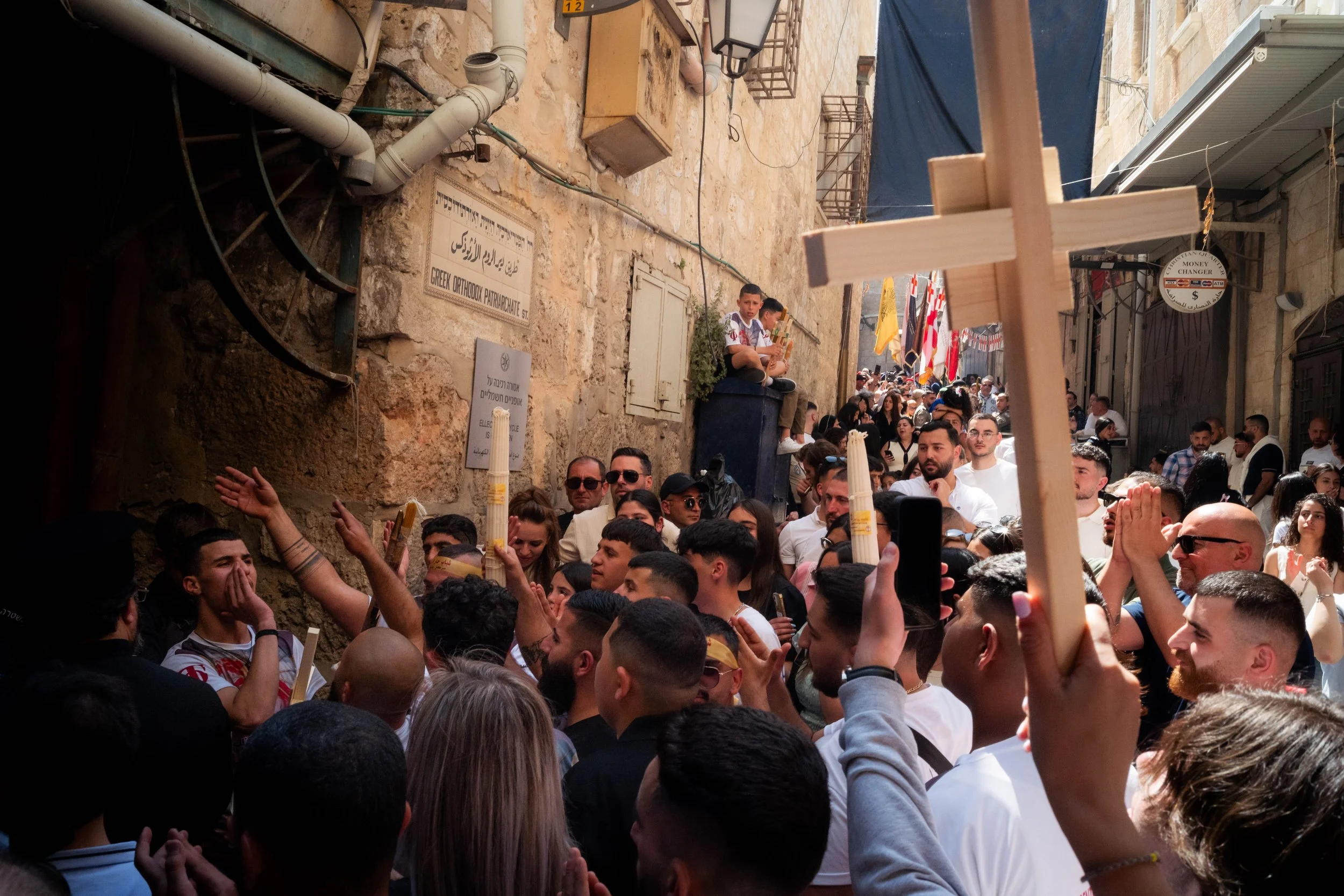
When I returned to the group of lads, the street had completely changed. It was far busier, with many more people, and the route was blocked. I needed to retrieve my ticket, and time was running out. As I tried to navigate the narrow streets of the Old City, I kept encountering barriers set up by police in green uniforms carrying assault rifles. I explained my situation, that I had a ticket and needed to retrieve it, but they would not let me through. I do not blame them. I am sure many people were telling the same story, falsely or otherwise.
I could not get through to my contact who had my ticket, which was not surprising. Not only was phone signal poor due to the volume of people on the network, but as I spoke to others, stories emerged about altercations at different checkpoints. Key figures, diplomats, and priests were reportedly not being allowed into the Old City. It was a shambles.
Eventually, I gave up after trying numerous checkpoints without success. I joined the queue of worshippers in the long procession towards the Holy Sepulchre. I was not going to see the Holy Fire inside the church.
The queue through the streets was slow and often stationary. People constantly pushed past, arguments broke out, yet this contrasted sharply with bursts of celebratory singing and chanting.
As we moved slowly forwards, I kept trying to call my contact. His shop was on the route to the Holy Sepulchre, which I was trying to reach, but the pace was slow and the heat was pressing in. My phone finally connected, and I got through to him, but he was telling me he had had a dispute with the police. I could not hear what or why, and then rumours began that he had been taken away.
Eventually, I reached the shop to find his mother, sister, and in-laws waiting there. There was a police checkpoint just up the street, another at the junction, and one being erected behind us. We were penned in.
This is how we spent the remainder of the ceremony: waiting. People were rarely allowed through the checkpoints. Occasionally, some would try to climb over, prompting the police to intervene, sometimes roughly. Another group of lads, also penned into the junction, continued chanting, jumping, singing, and waving crosses.
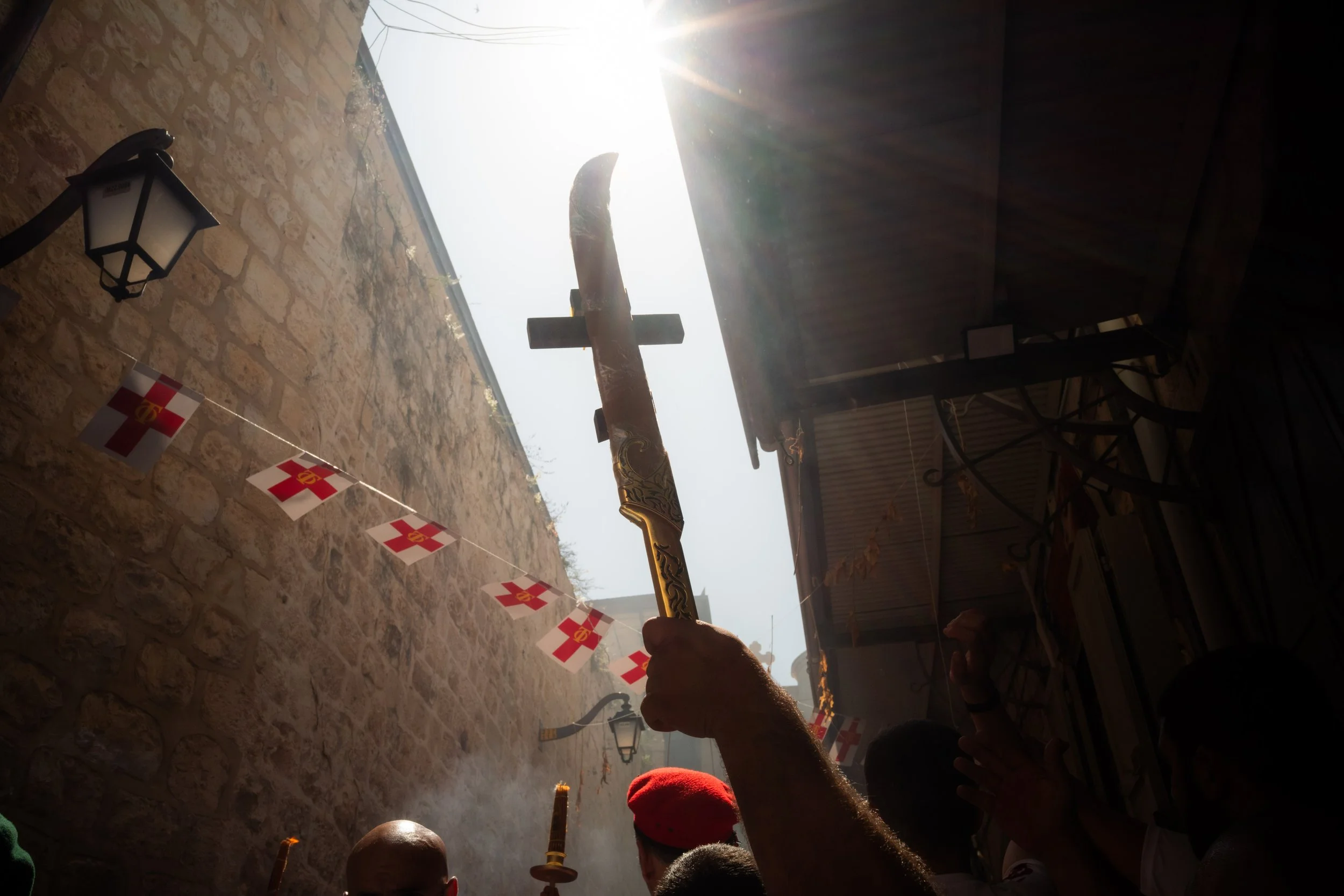
At one point, a moment of excitement broke out when one individual, who had been waving a cross, suddenly pulled out a sword and began swinging it above his head in celebration. This was quickly stopped by his friends, who suggested it might not be the most sensible thing to do. The police appeared unfazed by this, an odd contrast to the aggressive way they were handling people at the checkpoints.
There was limited access to water or toilets. Fortunately, my contact’s shop had both, and people were making use of them. At one point, the police officer who had questioned me earlier came into the shop to use the toilet. We made eye contact, but nothing more. I was worried he might remove me again, but either the shop’s permission or his indifference spared me.
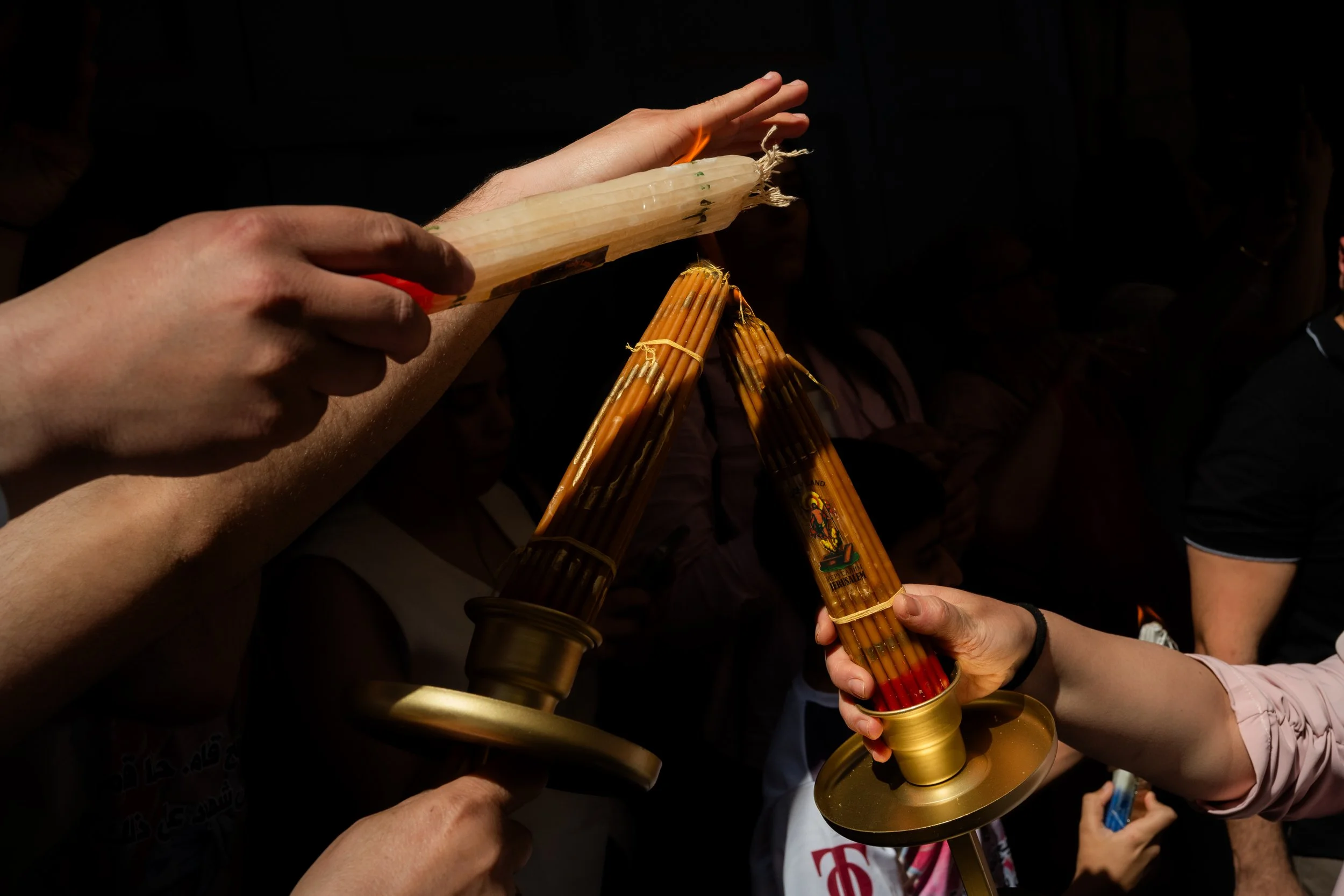
We heard that the Holy Fire had been lit and was not being passed around inside the church. It would not be long until it spread through the streets. Everyone had their candles in hand, waiting for the moment. Everyone wanted the Holy Fire to light their candles and bless them.
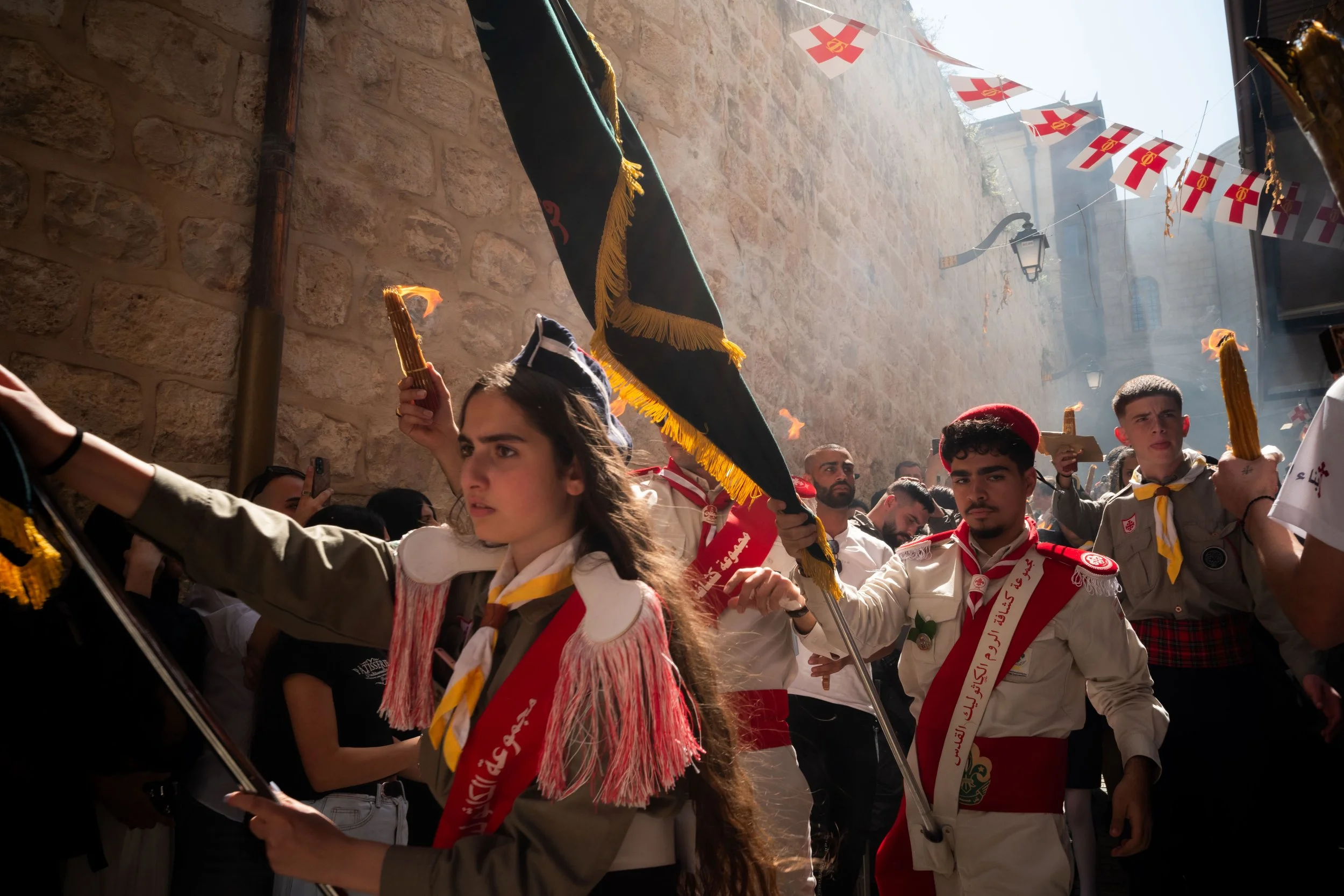
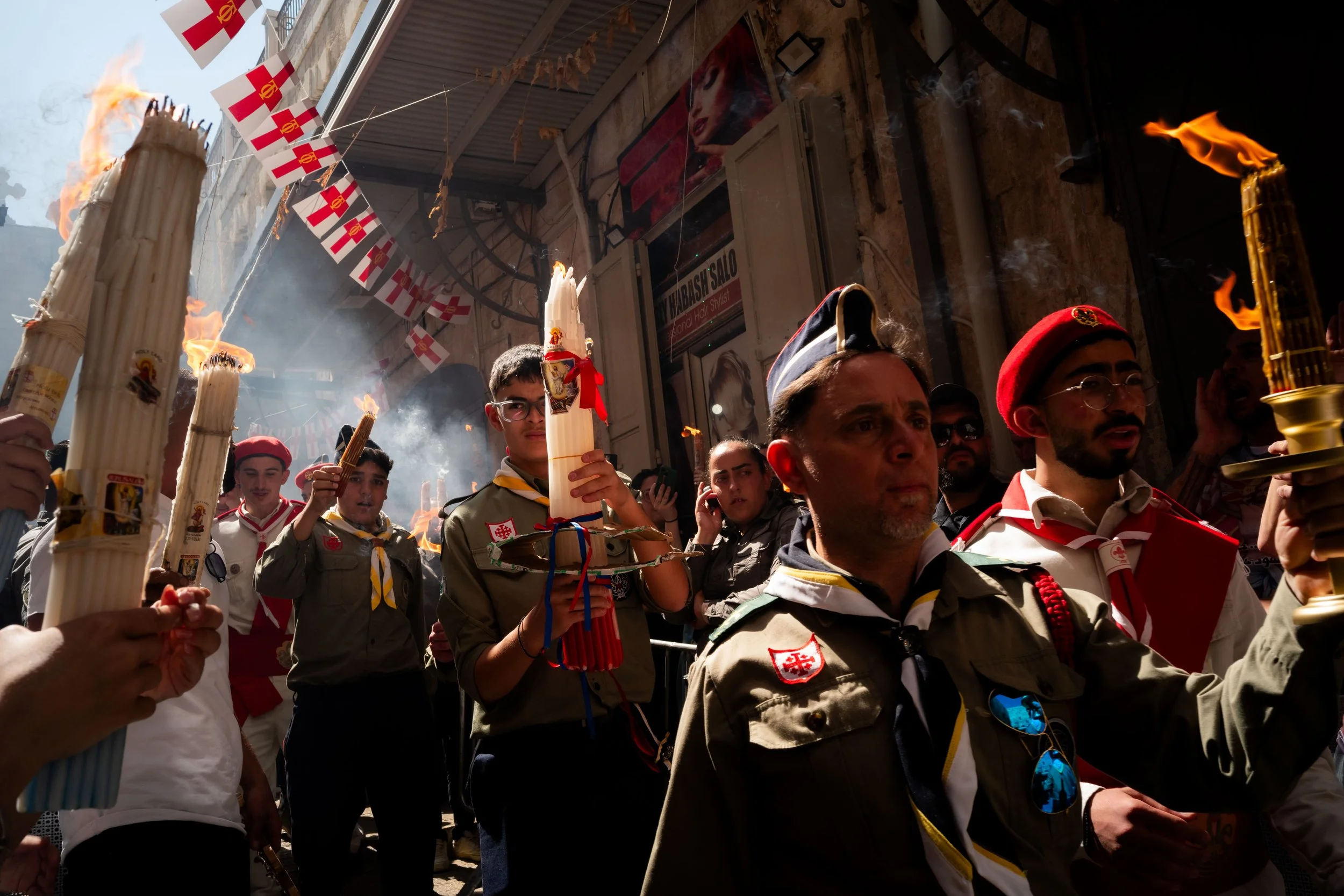
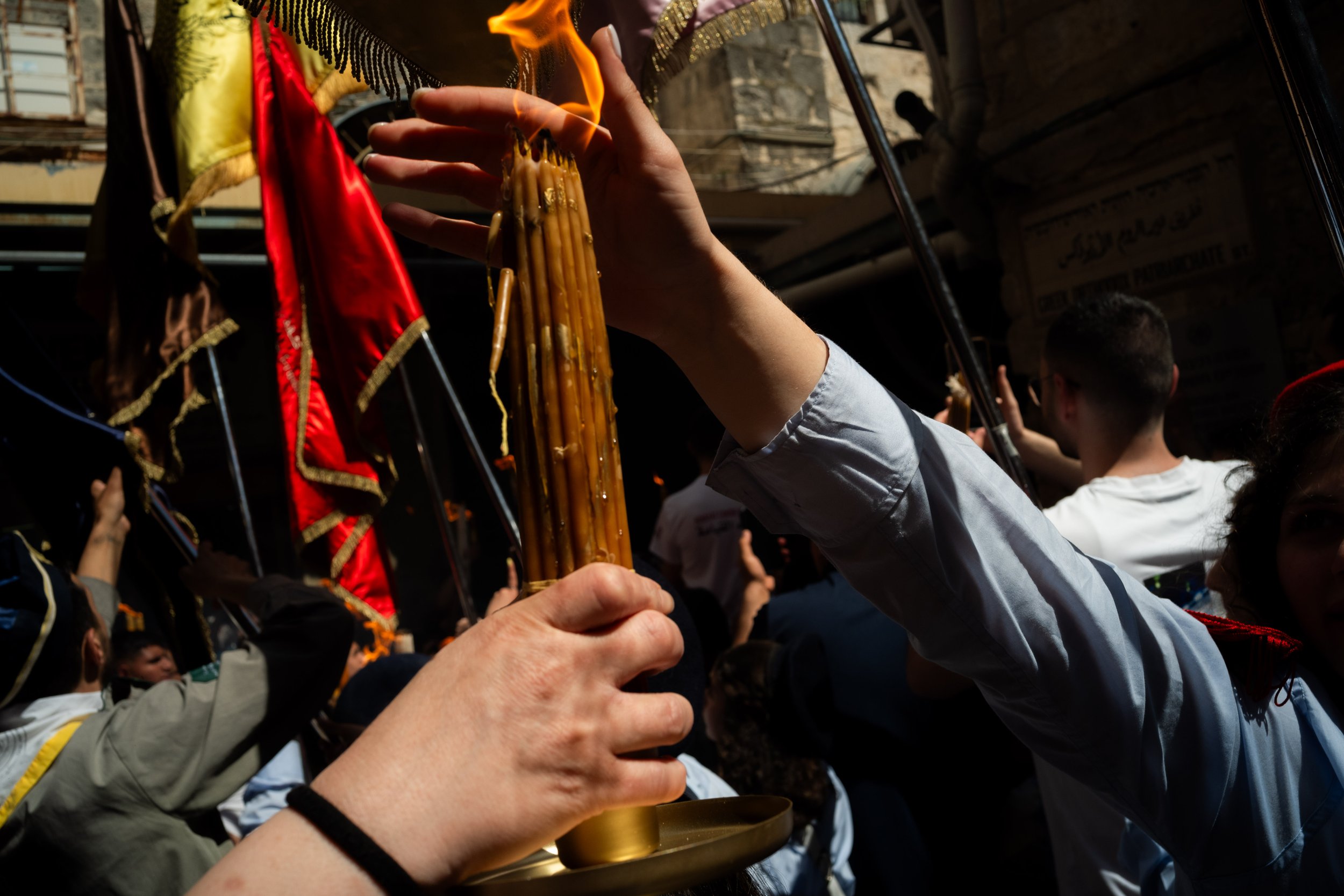
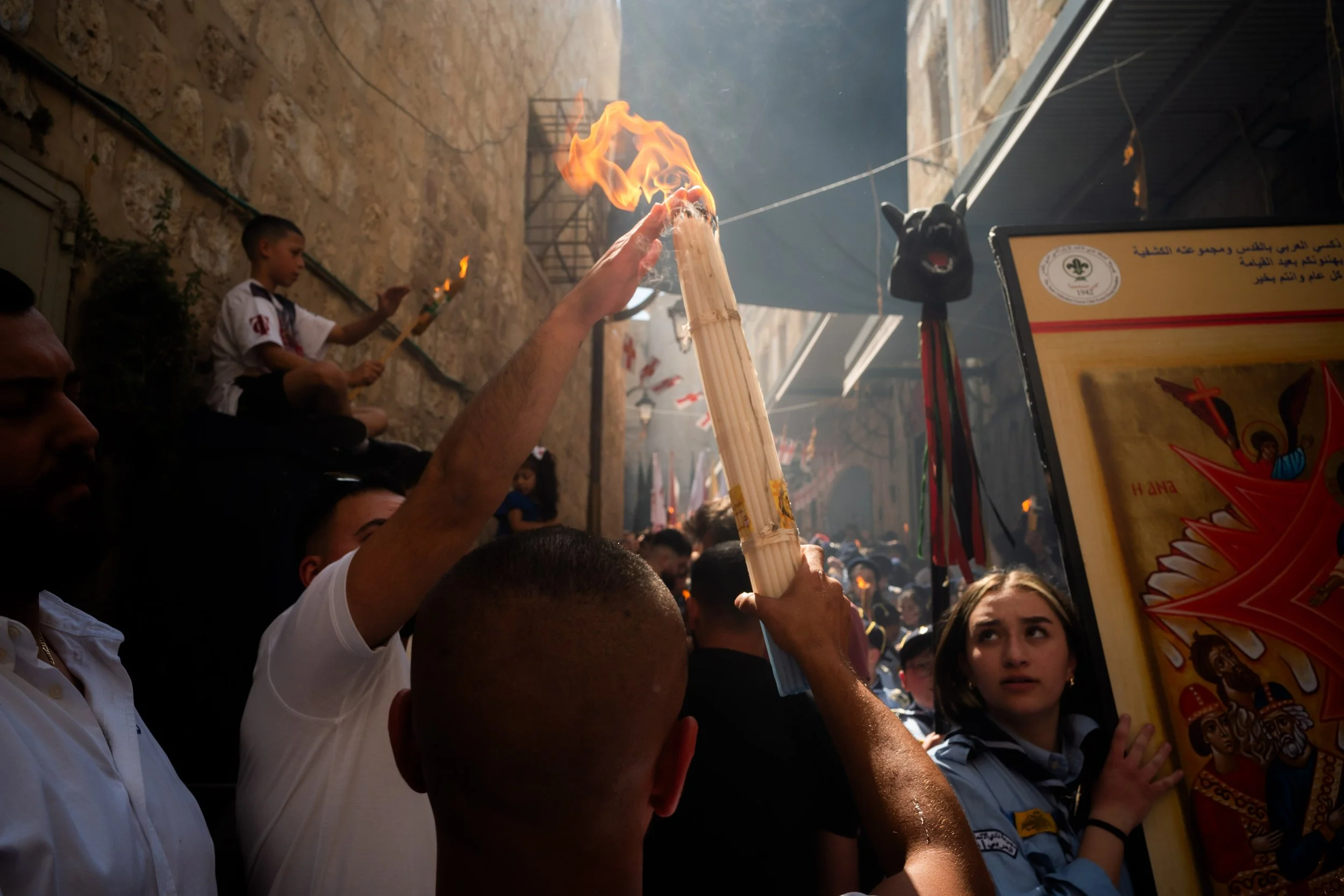
When it came, it was electric. The moment the flame came around the corner, the energy surged. The rush, the singing, the cheering. Suddenly, the checkpoints were opened, and the scouts, who traditionally play a major role in the celebrations, marched down the street with banners and crosses, candles ablaze.
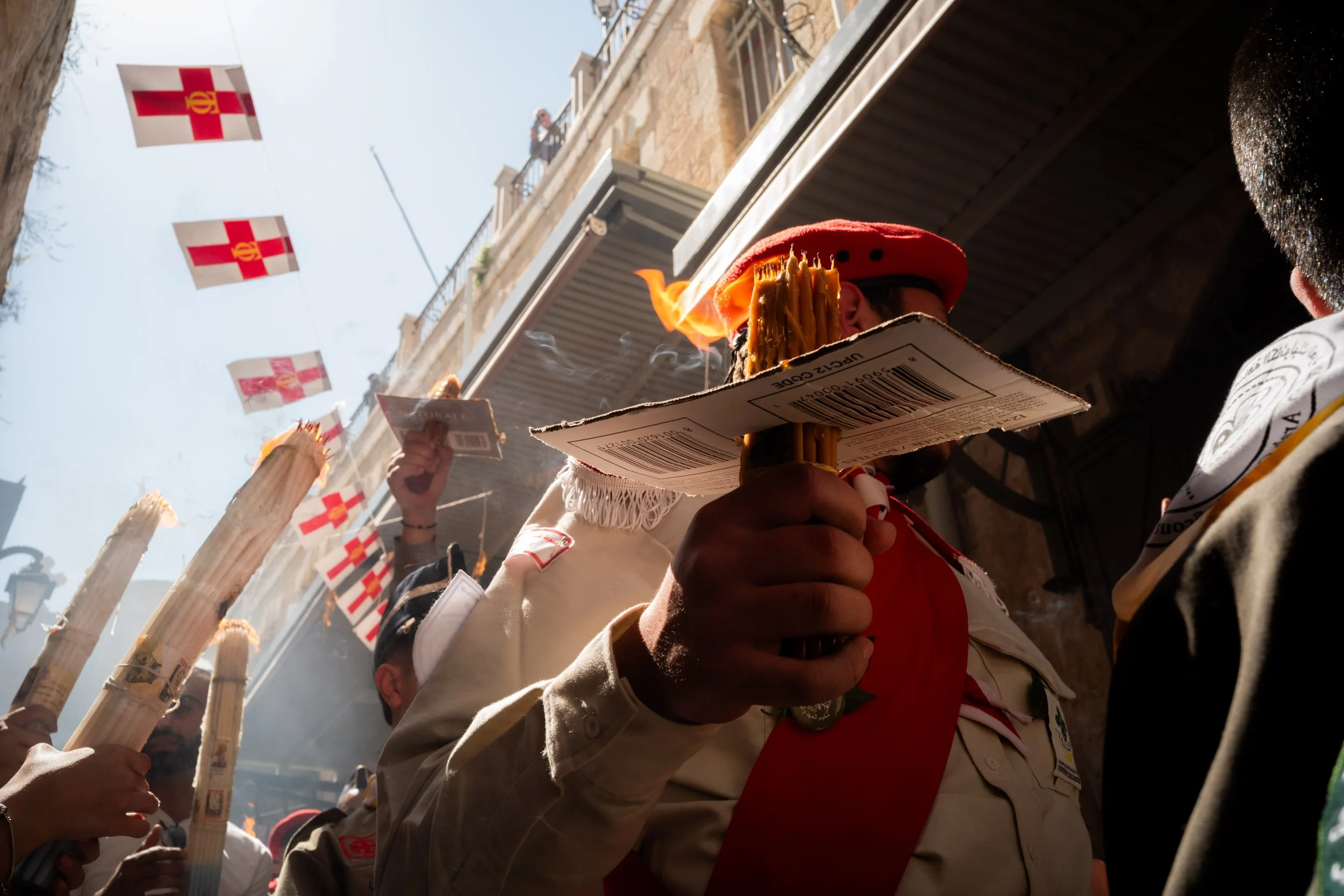
The smell of candle smoke filled the air. People passed their hands through the flame to be blessed. The Holy Light does not burn. The energy was like a goal at a stadium. People were ecstatic.
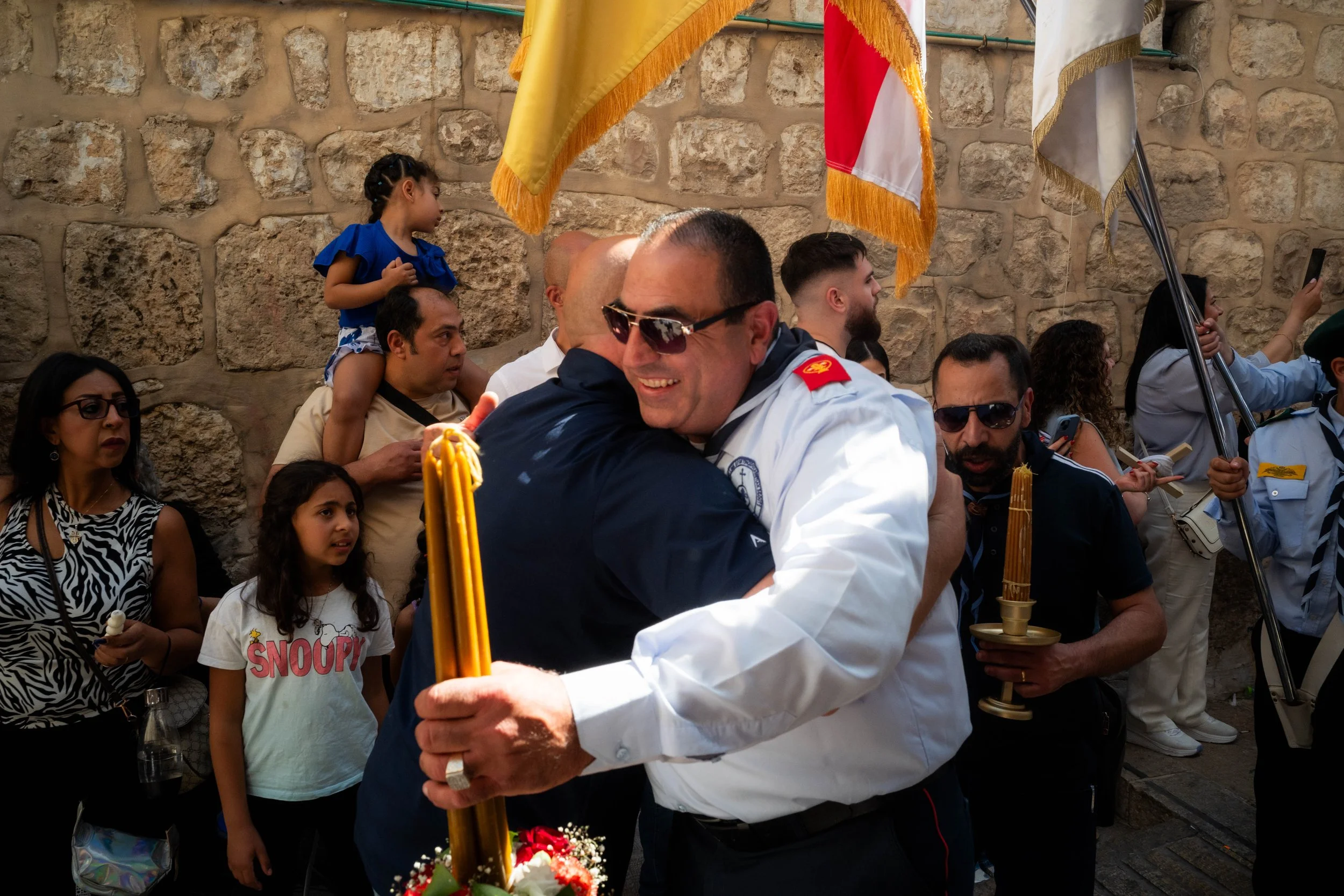
At this point, the tension dissipated. The flame spread through the streets, and suddenly the police were gone. People were rejoicing, chatting, smiling, and relaxed. The streets opened, and movement resumed.
But there was still concern. Rumours about what had happened to the scouts circulated. They had been meant to reach the church much earlier but had not been allowed, and many had not even been permitted into the city. Traditionally, they help organise and steward the event. Not this year.
One father I spoke to said he had been assaulted by police, only for his son to step in to defend him and be beaten himself, a 17-year-old in his scout uniform on a day he was meant to be serving. Another story involved a scout leader I had met in previous weeks, who had a gun pulled on him and pointed at his face by a police officer.
While individual incidents could be dismissed as isolated, the sheer number of them, along with the increase in smaller aggressions towards the Christian community, suggests something more troubling. Local Christians I spoke to voiced concerns about their ability to worship freely. They described a constant pressure to leave, their lives made increasingly difficult. Many already had, seeking a more peaceful existence elsewhere.
Those who remained still held hope. Hope that peace would return and life would normalise again. Easter is a time of resurrection, of Christ dying for our sins and rising again. That message resonates deeply with those still living in hope that they will one day have the space to worship freely, without fear or obstruction.
My concern, after seeing what I did, is how authorities can treat their own people in this way. It is difficult to see how this improves in the short term. Continued restrictions and pressure risk making the community increasingly fragile and dispersed. These actions are rarely challenged, and many locals no longer turn to authorities to resolve issues, instead relying on their own communities for support.
This, in turn, deepens an “us and them” divide, something we see elsewhere in society, driving division and dehumanisation. Change, if it is to come, must come from the top, shaping a society that sees itself not as divided, but as one.
I saw a people devoted to their religion, devoted to peace, and a people who have remained in this city for millennia. When I spoke to some of the children at the local church adjoining the Holy Sepulchre, they too showed hope and resilience. They were more committed than ever to their faith, determined to carry it forward and to remain in Jerusalem, close to their holy sites.