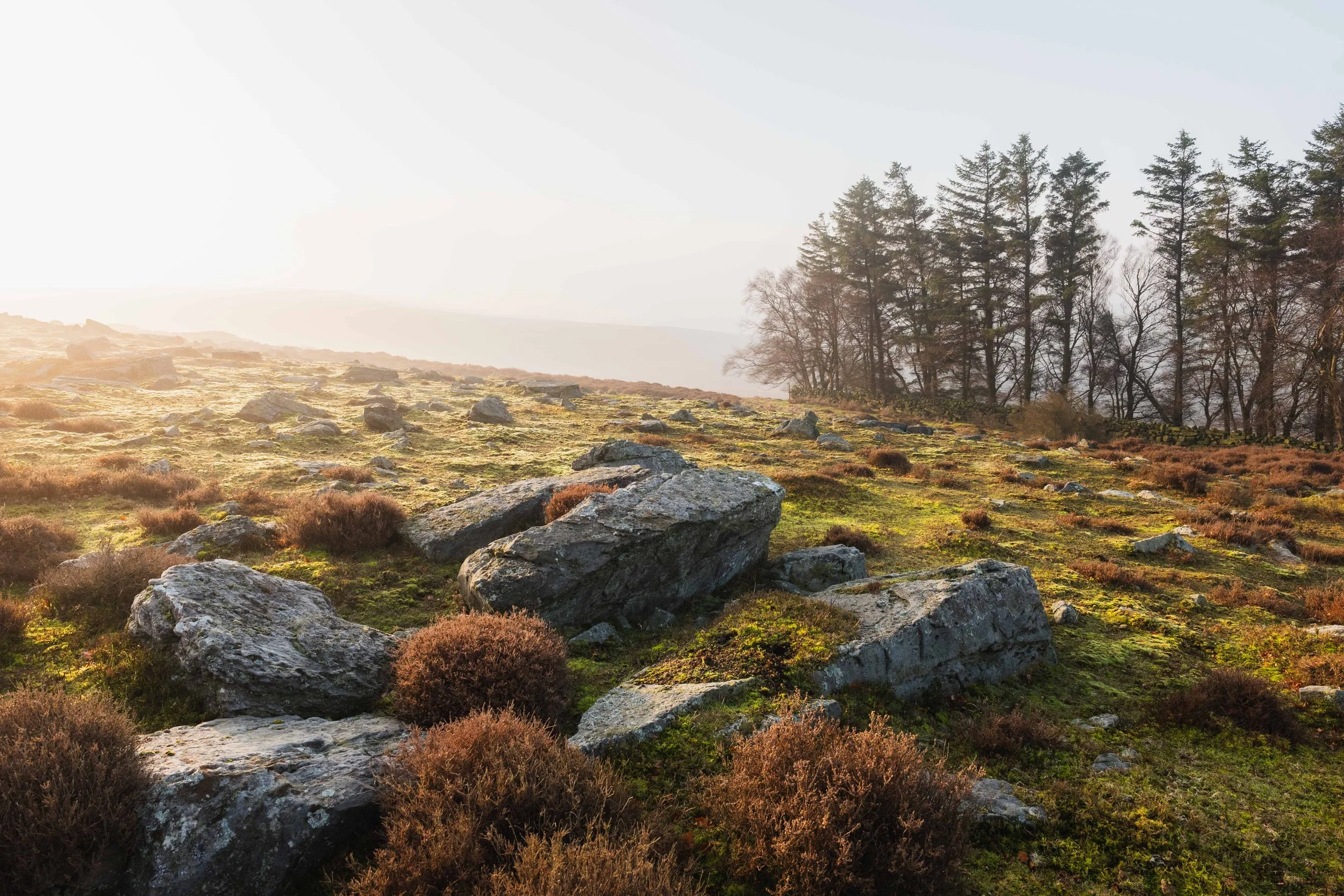
We have had a huge, long wet spell in the North York Moors, mirroring the trend the whole of the UK has been experiencing. Long days of heavy downpours, gentle showers and then constant drizzle have left the ground saturated and boggy. Worse still, the sky has been filled with cloud with very little light. This has meant there has been little opportunity to get out with the camera and photograph some of the stunning scenes across the moors.
It is an interesting one. There are a lot of national parks with expansive moorland in the UK: Exmoor, Dartmoor, the Peaks, the Lakes, the Dales and the North York Moors. While they all share some characteristics, each has its own very specific look which, if you know them well, is strikingly different. Whether this is the way the hills roll, how the valleys start and finish, or the sharp and dramatic nature of the mountains and rocky outcrops, each landscape carries its own identity.
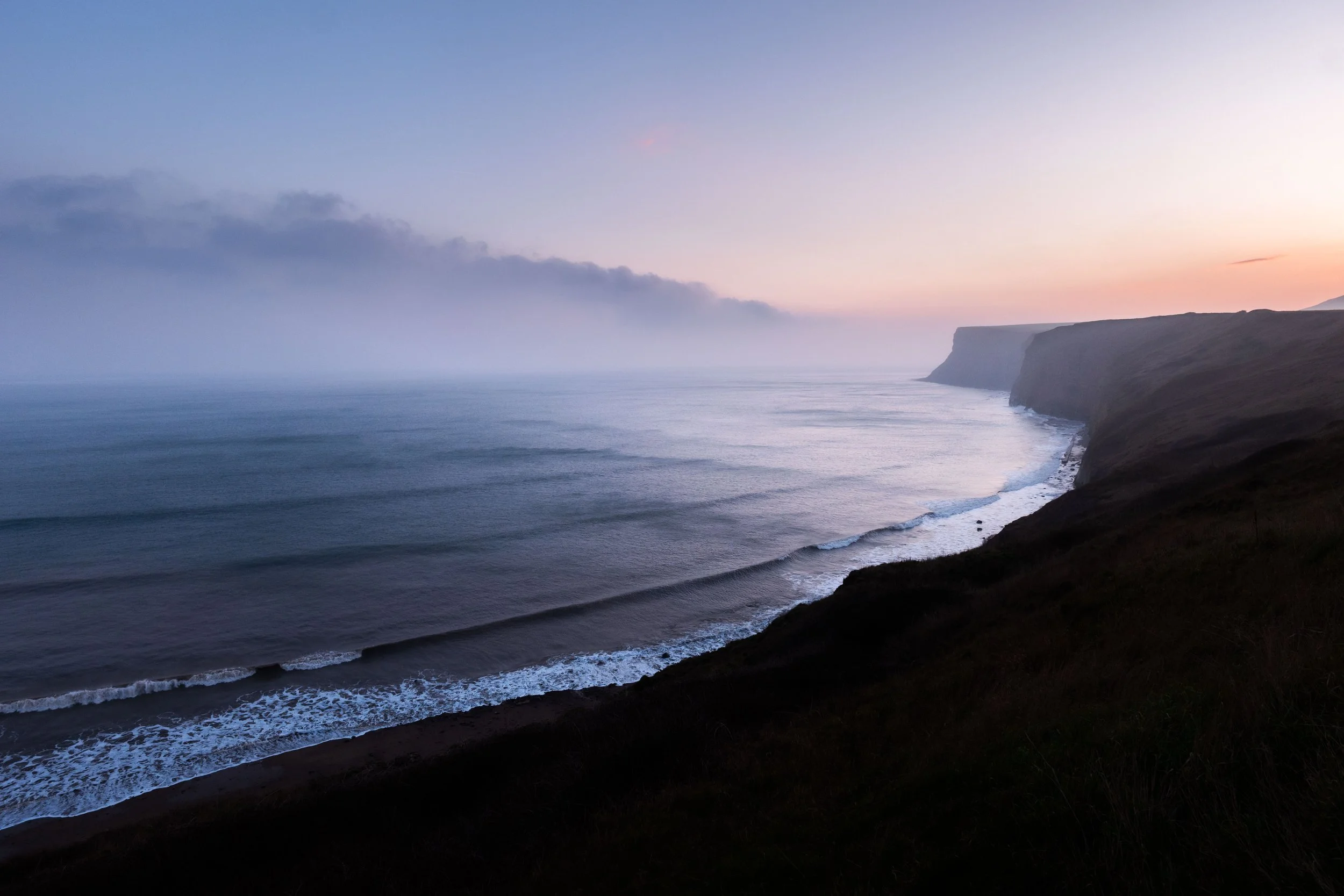
I am still getting to know the North York Moors, but it is such an adventure. Its dales form valleys a bit like a splayed hand, all meeting at a central point. Its moorland forms large, expansive rolling hills that drop off sharply into lush green valleys with dry stone walls, gnarled trees and ancient barns.
There are not so many obvious key landscape locations in the North York Moors. It does not seem to have its iconic viewpoints mapped out in quite the same way as many other national parks. Instead, it feels more scattered with smaller, more intimate scenes that one has to hunt out and find for oneself. That is not to say there are not many photographers photographing the moors. It is just that they do not seem to be photographing the same things.
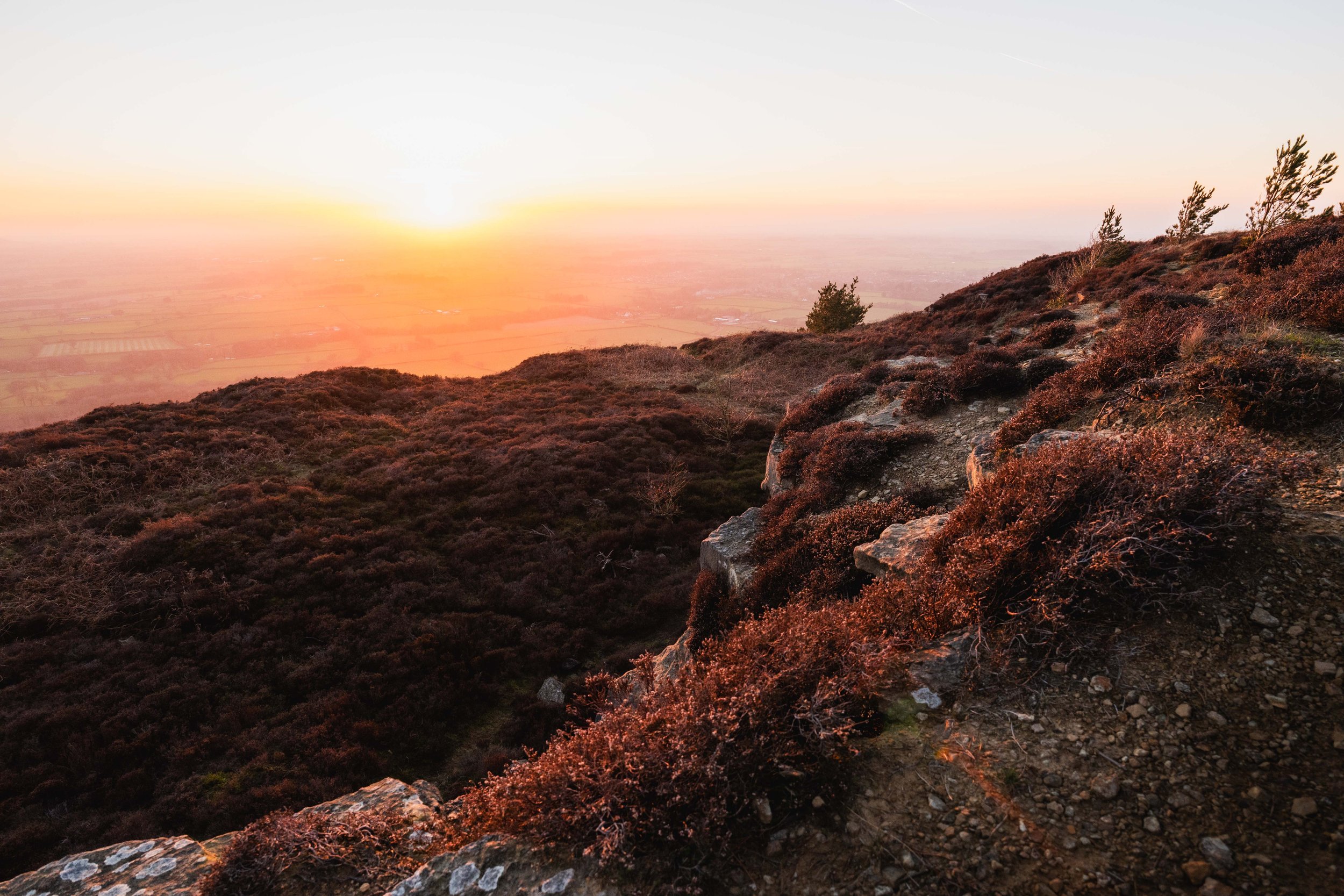
Roseberry Topping might indeed be the one place that fits this description. Its iconic cliff edge and solitary position away from the main moorland make it immediately recognisable, affectionately nicknamed the Yorkshire Matterhorn. I can see why it has gained this nickname. Yet even with such an iconic site, there is no single typical angle from which it is photographed. Instead there are countless ways one might frame it, with rocky walls or old quarry edges providing interesting foregrounds.
What I am looking for are images of the moors that people have not necessarily taken before. Images that tell the story of the moors as I see them. An ancient landscape, inhabited yet sparse. Starting from not knowing the moors at all means I have my work cut out, but it is also a fantastic opportunity to explore the little roads that head off in directions where it feels there should be little reason for a road to go. Those are the places where I am hoping to find the most compelling scenes.
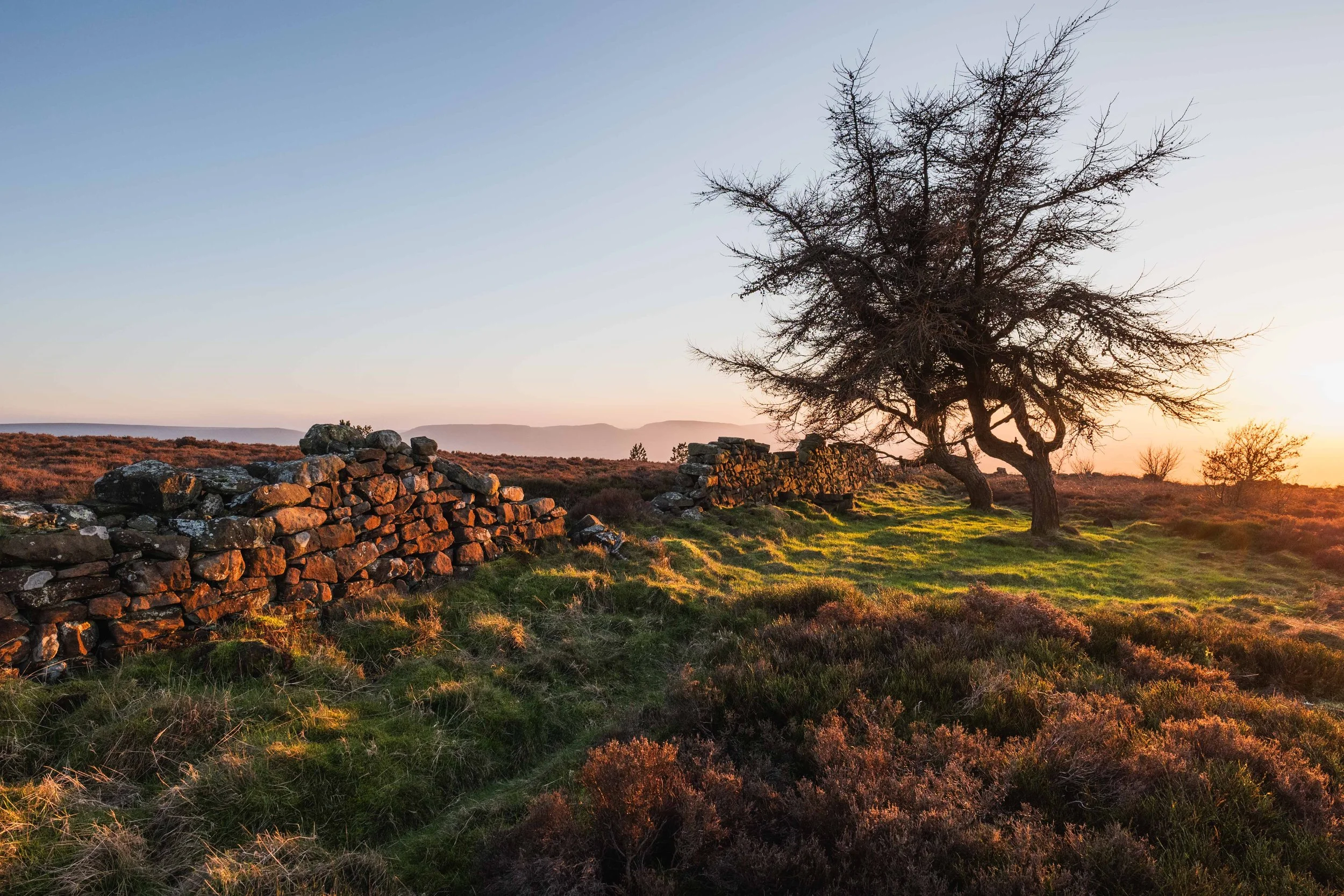
When I look for a scene I try to find something that initially catches my interest. A tree, a wall, a building, or perhaps a lake or mountain in the distance. Something for the viewer to rest upon. From there I try to build a composition around it. What should I include that adds to the subject and helps the viewer read the scene? Does this rock guide the eye towards the focal point? Is the grass blowing in the right direction? All of these small details help make up a scene and in the North York Moors there is a multitude of elements to work with. The only limitation is how to position the pieces of the puzzle to complete the image.
The other limitation, of course, is the weather, as I have already mentioned. Having not indulged in landscape photography in depth for a while, I had almost forgotten that you cannot simply move your subject. Everything depends on where the light is falling, something that changes throughout the year and at different times of day. Is this a sunrise location or a sunset one? Will the sun move around far enough in winter to illuminate it, or will it remain in shadow until the light becomes too harsh later in the day?
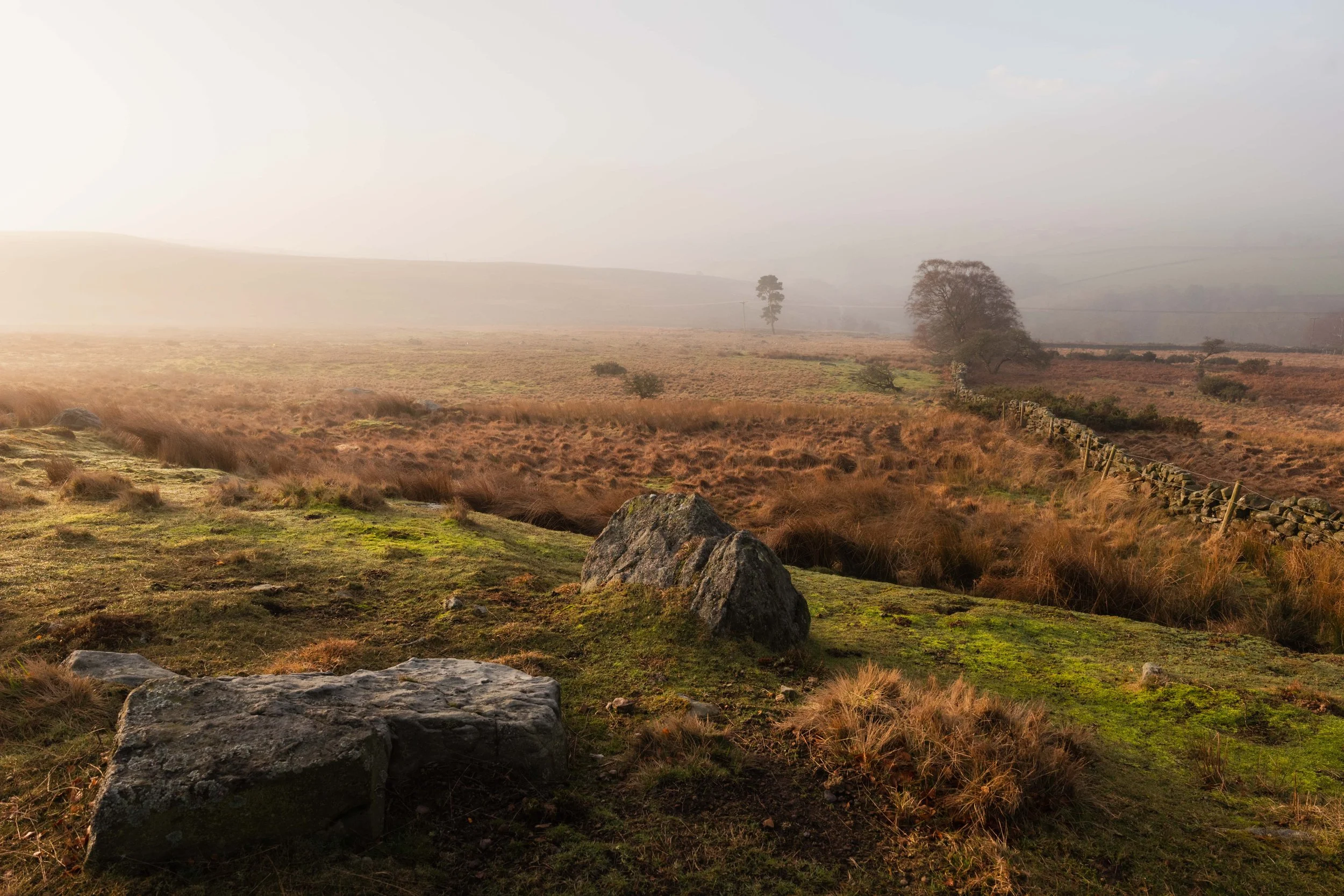
These are things I am slowly learning, compiling a mental map of the features I enjoy and making notes of when I think they might be best photographed. The photos attached are some of my first few forays into the moors specifically in search of landscapes. Many more to come.
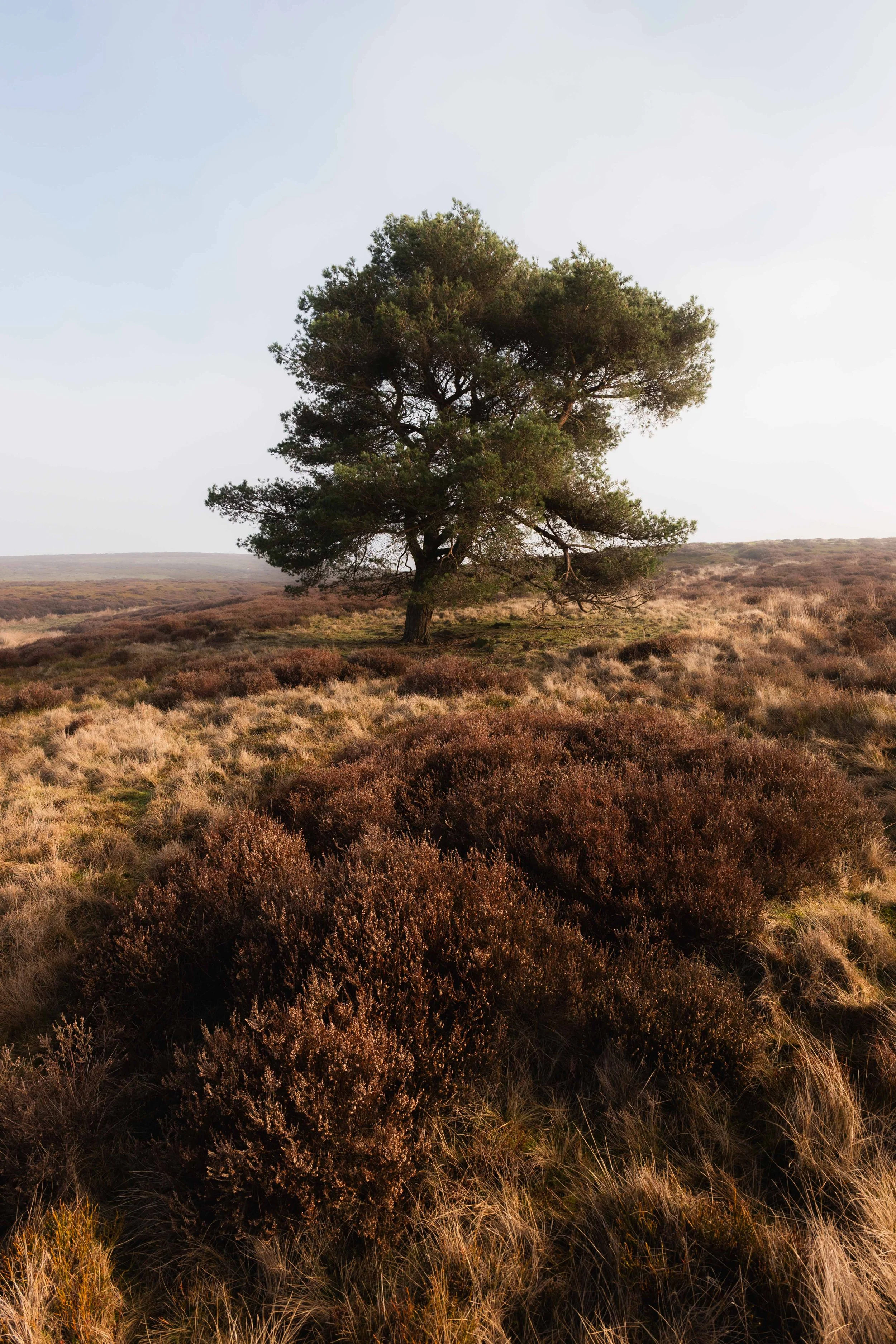
If you liked the photos in this post and would like to take similar please consider joining me on my North York Moors Photography workshop where i will go through some of the skills and method i employ to find stories in the landscpae.