These are my thoughts, my experiences and what I witnessed.
Last year, I spent Holy Week in Jerusalem before the US brokered a ‘ceasefire’, which started on the 10th of October 2025. While the injustices suffered by the Palestinian population in Gaza had been widely reported in the media, this overshadowed those suffered in the West Bank, and further still those living on the border of Jerusalem. I wanted to explore what was being experienced by the Christian population in Jerusalem. While diverse, and including many groups such as Armenian, Russian, or European, the majority are Arab, typically Palestinian Christian. They are a minority within a population with limited rights, and they are facing pressure on their daily lives from limits on worship, forced changes in curricula for children, and abuse in the streets.
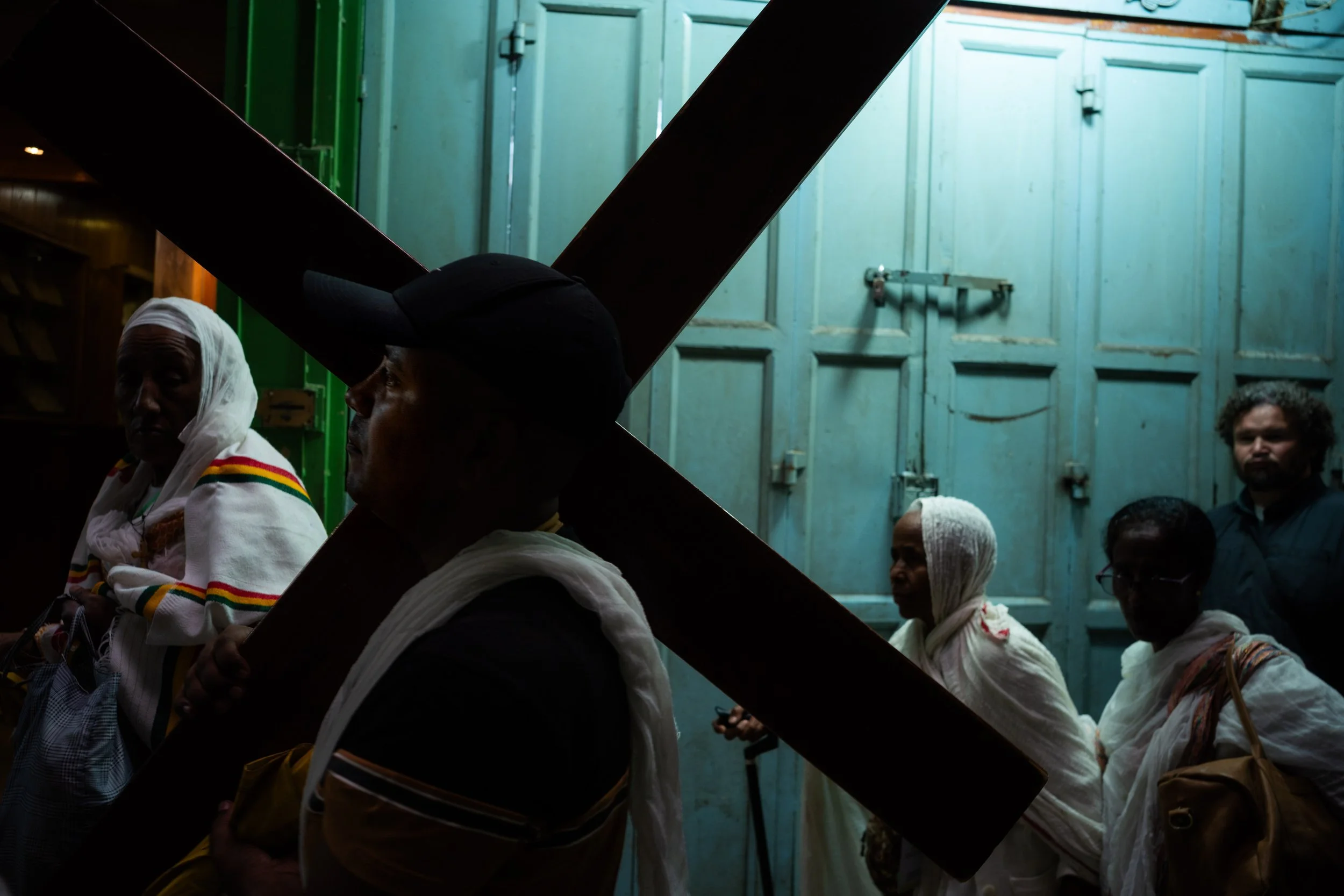
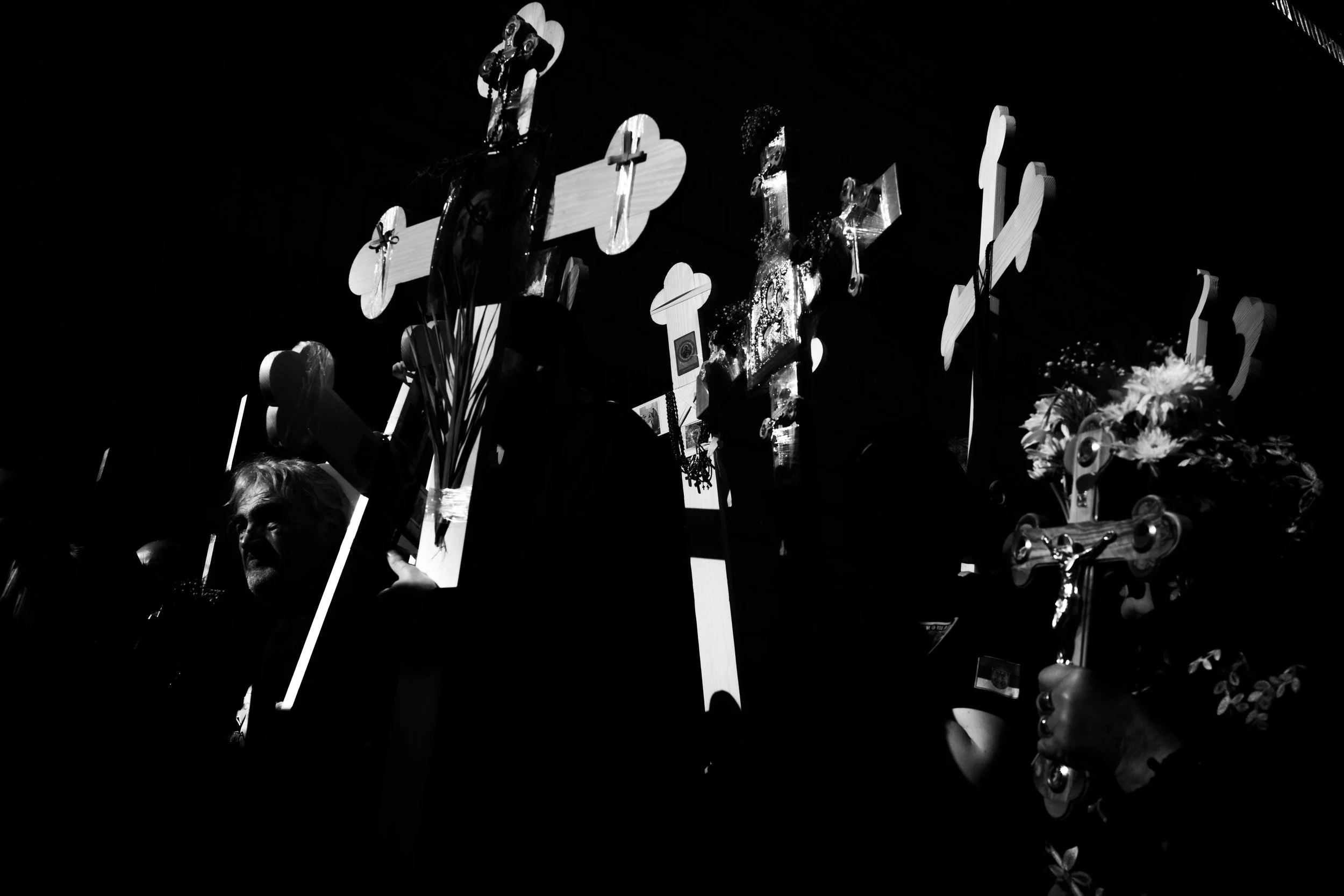
Today is Good Friday, the day on which Jesus Christ was taken from his prison and forced to walk with his cross to the hill of Calvary to be crucified. Christians retrace these steps on Good Friday each year, stopping at the 14 Stations of the Cross, key moments along the journey where Christians will stop, pray, sing, and pay tribute to Christ. In the story of the New Testament, he died to forgive the sins of humanity. This is particularly poignant, as on this day in Jerusalem last year, I witnessed a number of actions by the authorities or the non-Christian population that I would classify as abuse, namely spitting on religious leaders and Christian symbolism.
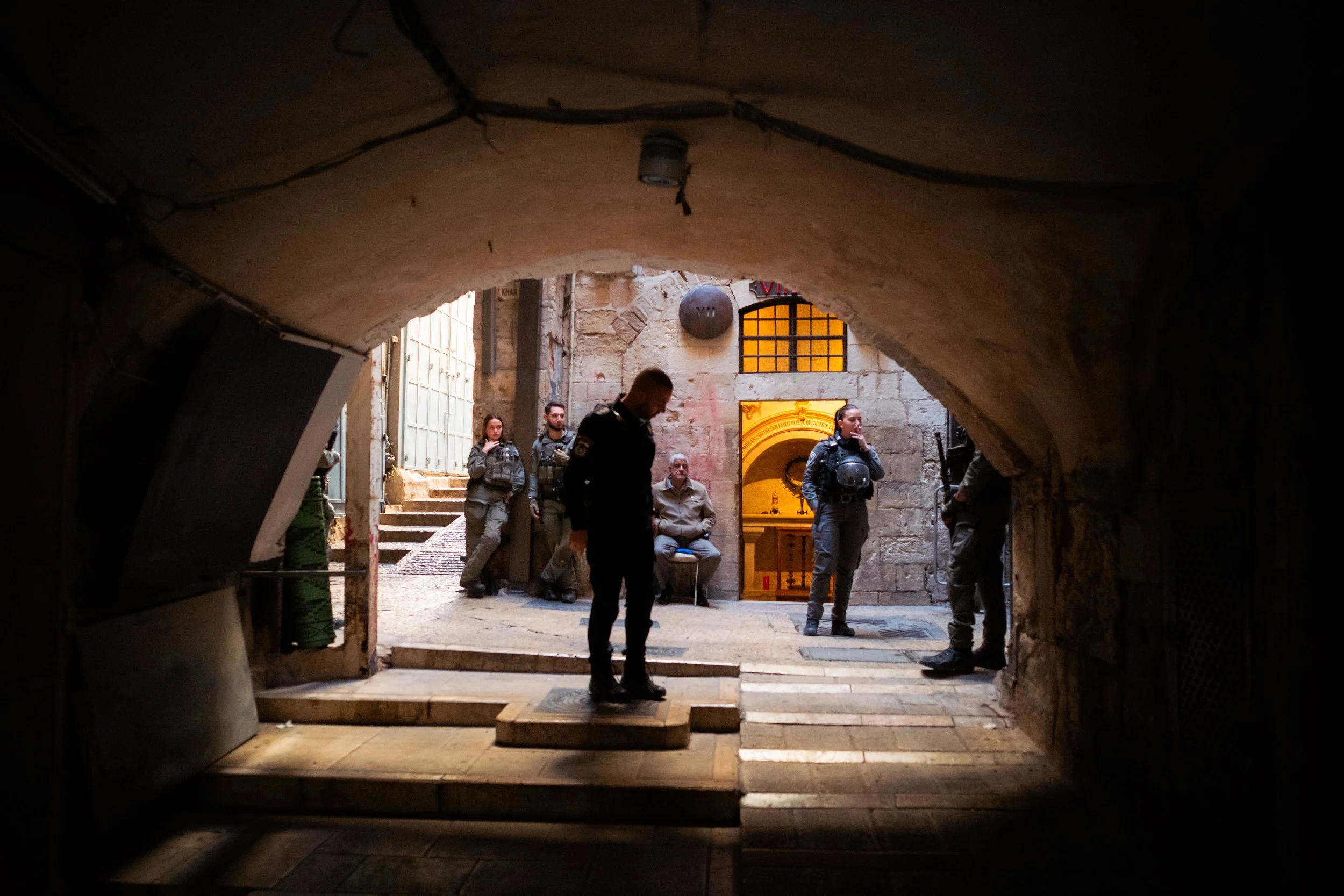
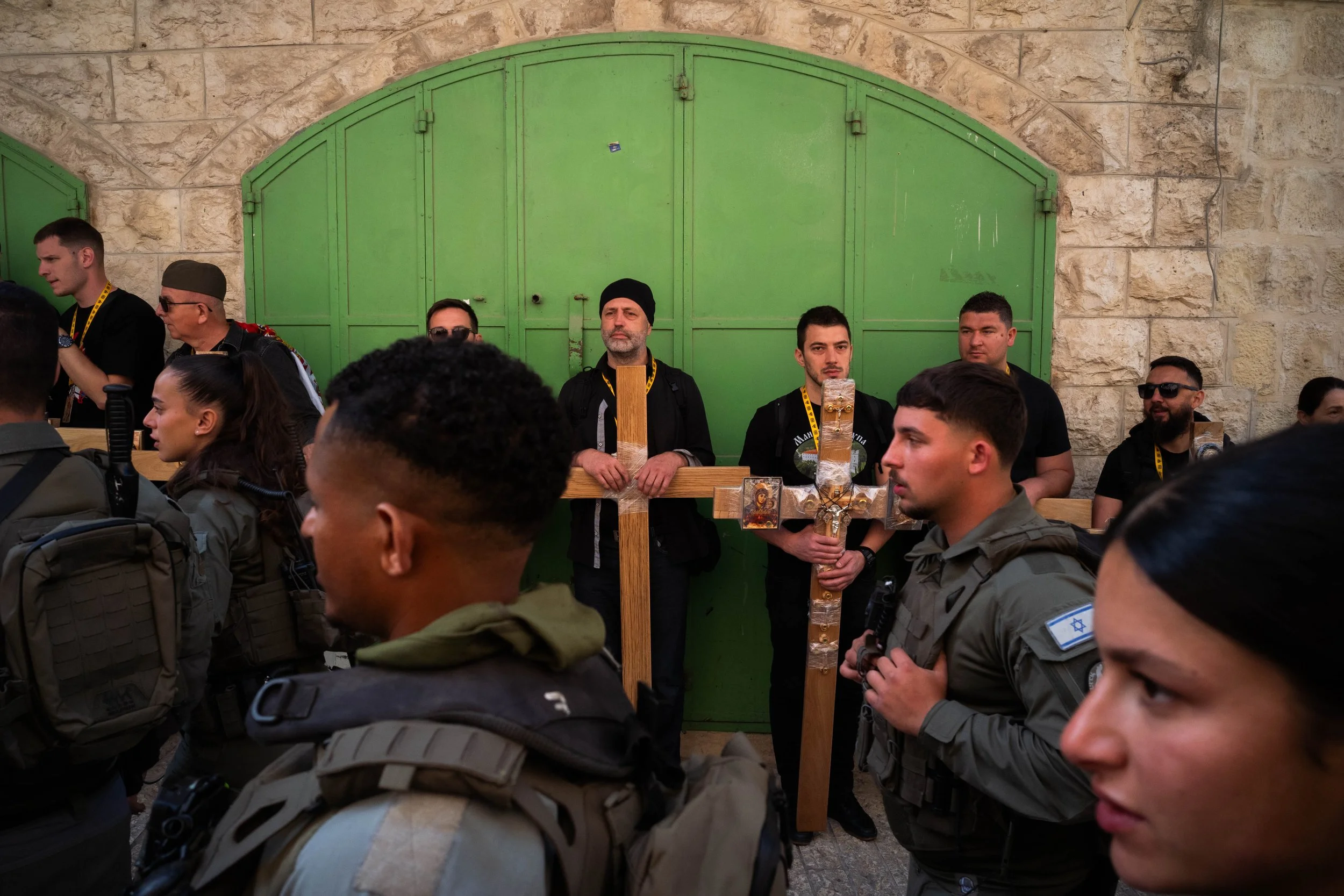
While the march to Calvary is a celebration of the selfless act of Christ dying for the sins of others, and many Christians, both local and from abroad, complete this march as part of their Easter celebrations, it was fraught with tension from sunrise. At each station were checkpoints with both local police and police in green uniforms carrying assault rifles, not just a few, but sometimes exceeding 10. Not only were there police, but military personnel had been brought in to help support the policing efforts over the weekend, some rumoured to have come straight from Gaza. Not ideal for managing a predictably peaceful civilian population without a recent history of violence.
These checkpoints, while on the surface serving to help the flow of people through the small city streets, also acted to block, hinder, and intimidate those trying to worship. Sometimes the stations would be blocked or severely impeded so that the flow of traffic and worshippers would not be able to take part.
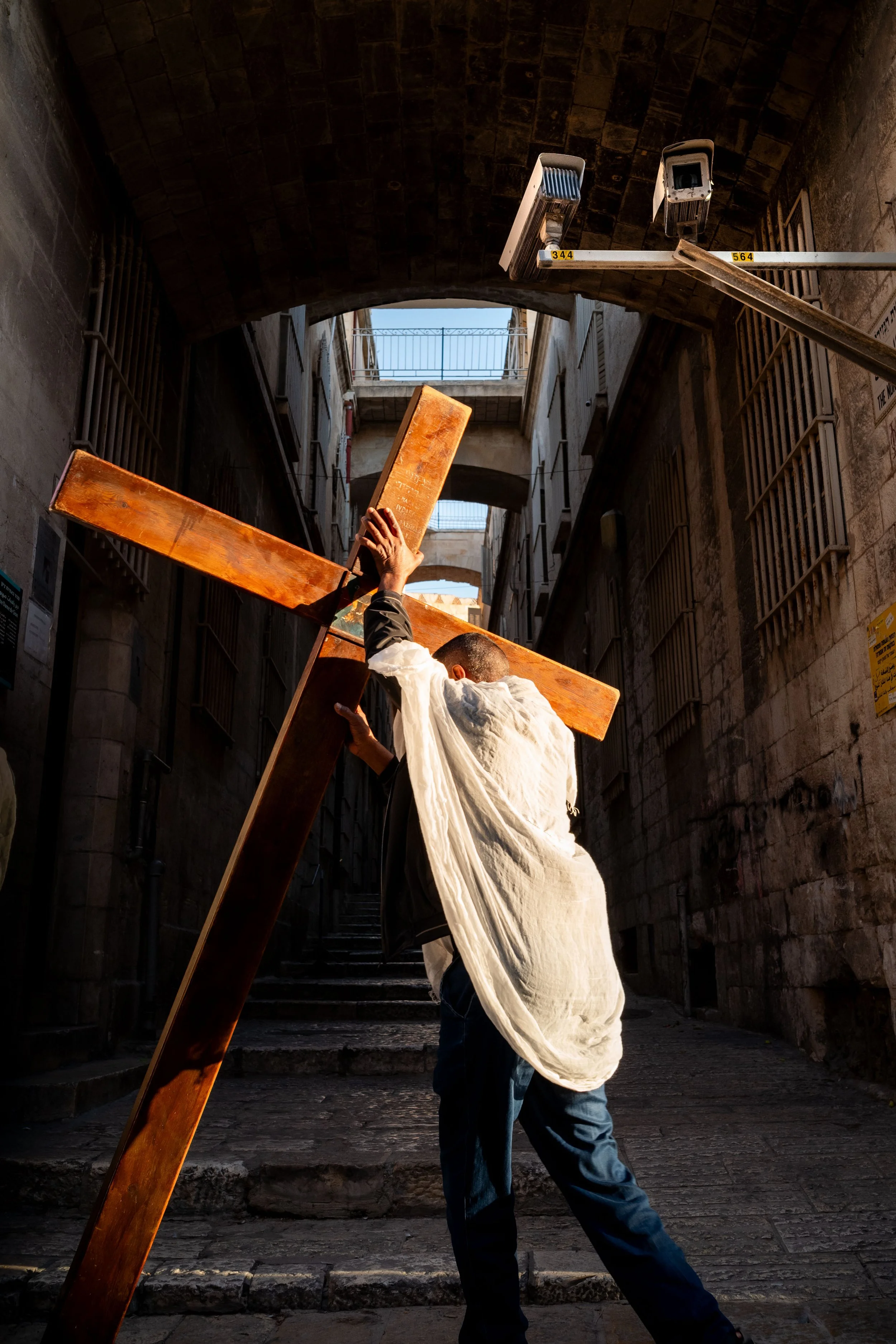
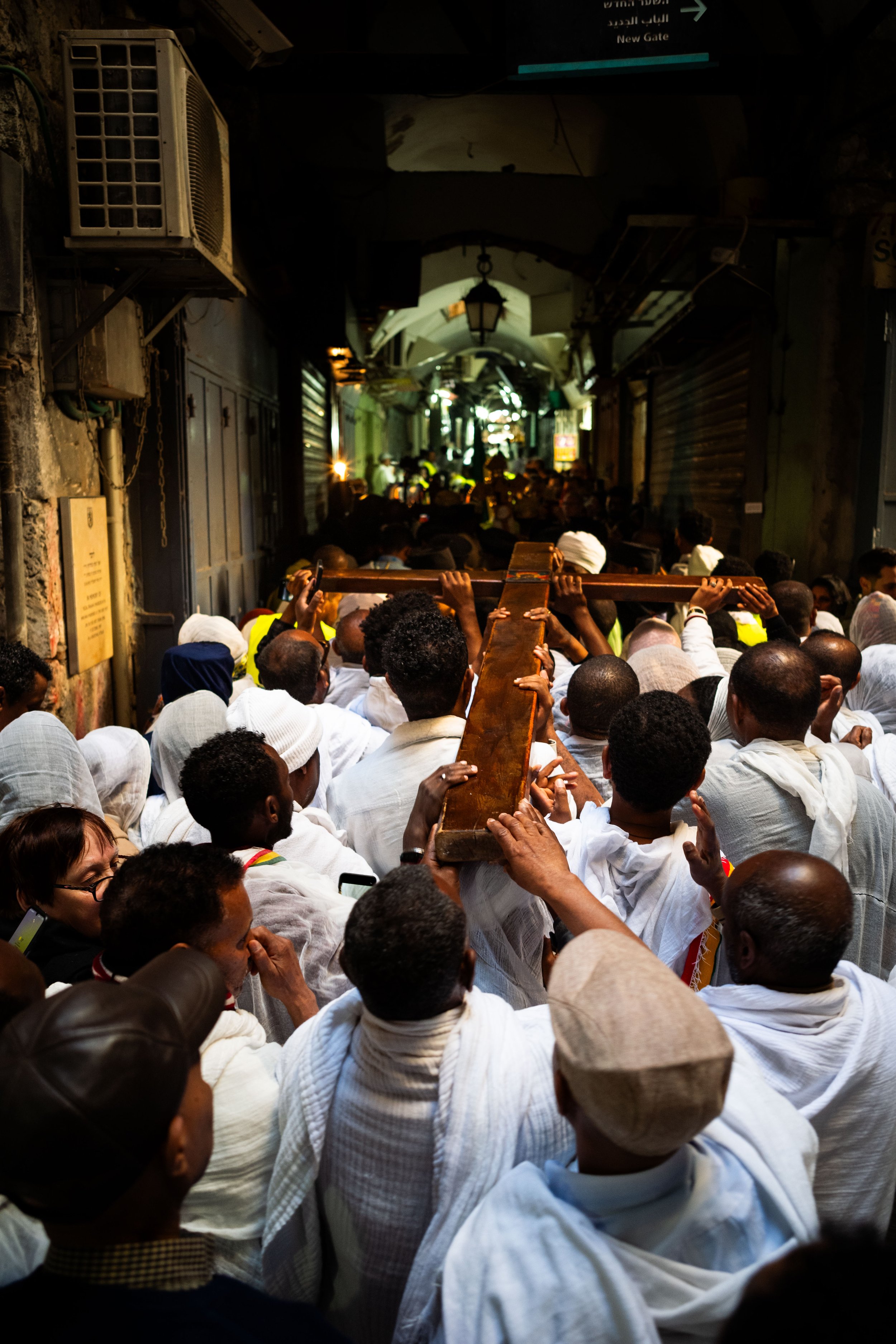
While roaming groups of military-esque police with assault rifles can be defended for the purpose of safety, and I can agree to some extent as I see similar, though lesser, measures in Paris and even less so in London, there seemed to be a slightly more sinister purpose behind it in this context. It is in this context that we have to consider it, taken together with the actions in Gaza, the annexation of East Jerusalem, and therefore the Old City by Israel (a move not recognised by international law), and the mounting limitations on the number of people able to worship in specific areas imposed by the Israeli authorities (this is not limited to the Old City in Jerusalem). It feels like a pressure cooker, trying to find an excuse to further hinder and hamper the use of Jerusalem as a place of worship for specific peoples.
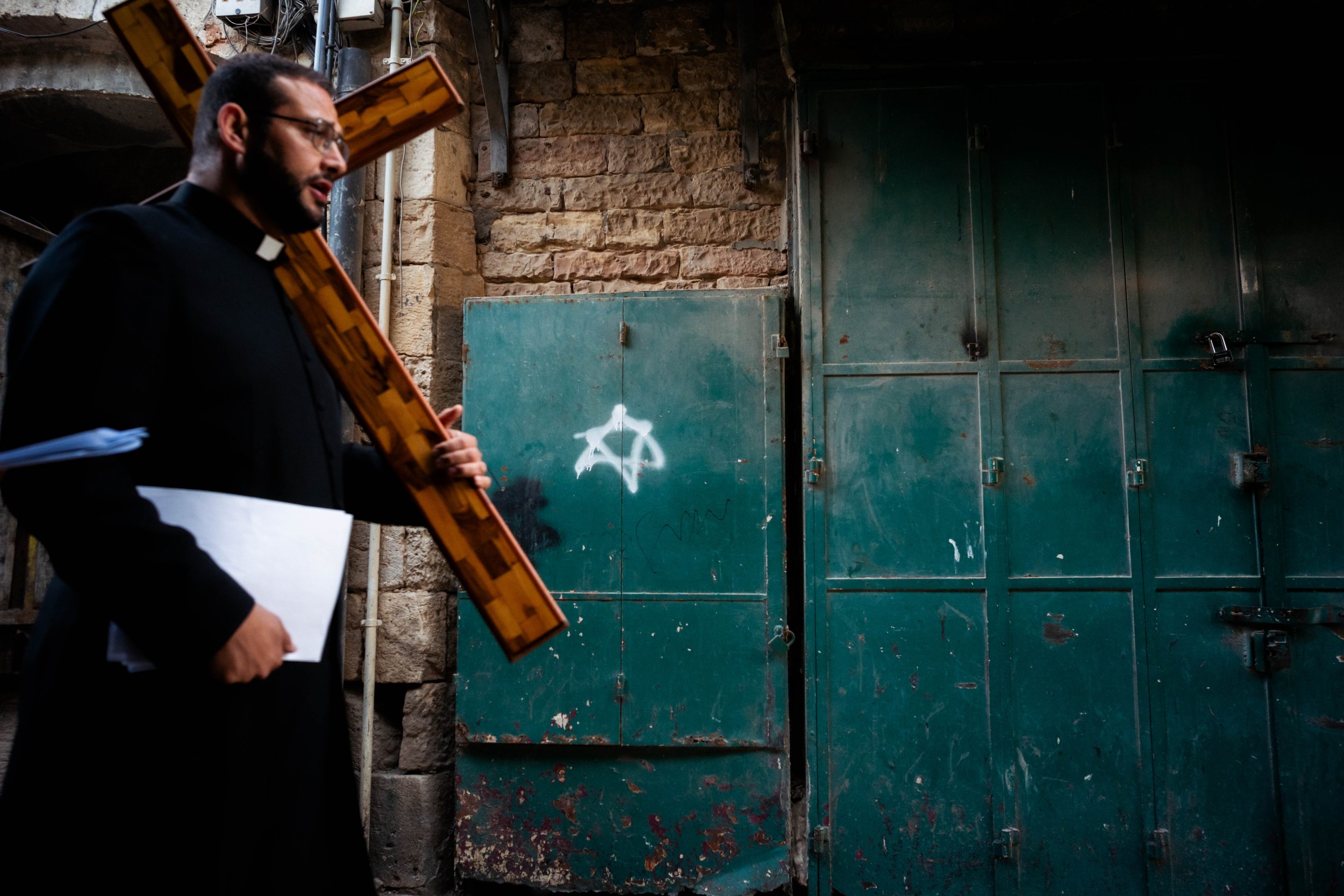
While it may seem counterintuitive, as the Old City brings in so much money from Christian tourists, revenue which the authorities might value, this appears to be secondary to whatever else they may have in mind.
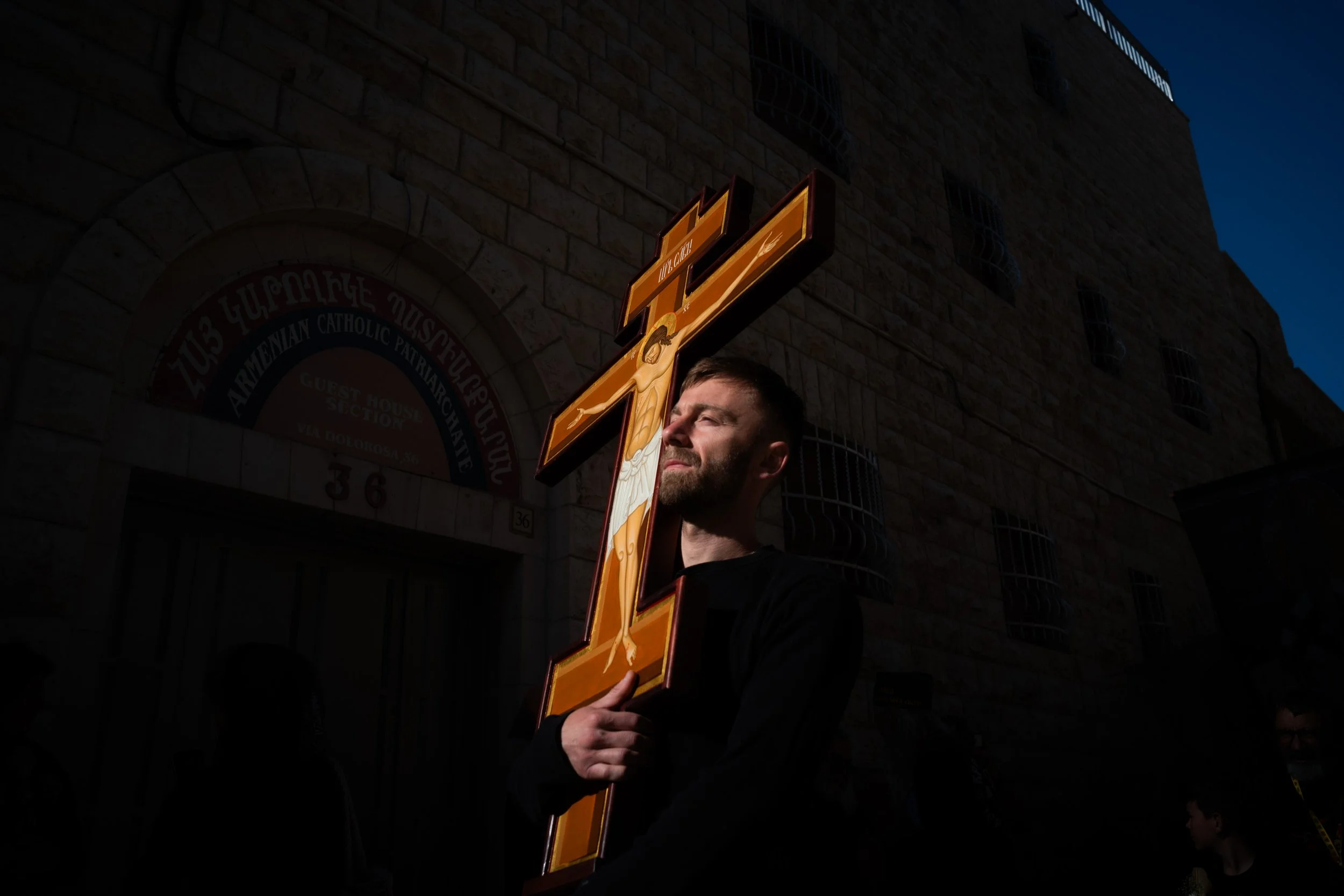
While agnostic, I cannot explain the power that Jerusalem had over me. Visiting places connected with such influential moments in history at times took my breath away in a way no other place has done. Jerusalem is important to all three Abrahamic religions and is a place none will give up. But, as I was told repeatedly by the Christians I met, they did not want to control it, they simply wanted to worship in peace. To visit their churches and pray – they felt they could not do this unimpeded, and while they had hope that this might be resolved, they feared there was a lot worse to come before it would be.